Samsung 65" M70H vs TCL 65" QM6K: Which Is Better in 2026?
Both are sold as Mini-LED TVs at 65 inches, and the Samsung M70H is one of the best-selling TVs on Amazon this year. But only one of them has the feature Mini-LED is bought for. Samsung's own spec sheet describes the M70H's dimming as software-based, and RTINGS found it has no local dimming at all; the TCL QM6K has a full-array Mini-LED backlight. The TCL 65" QM6K is modestly more expensive.
Verdict: Buy the TCL 65" QM6K unless you specifically want Samsung's software. It has real local dimming, a 144Hz panel with two HDMI 2.1 ports for 4K/120 gaming, Dolby Vision, and RTINGS scores it 7.1 against the M70H's 5.6. Choose the Samsung 65" M70H only if Tizen, Samsung TV Plus and a lower price matter more to you than HDR and gaming, and you watch mostly in a dim or moderately lit room.
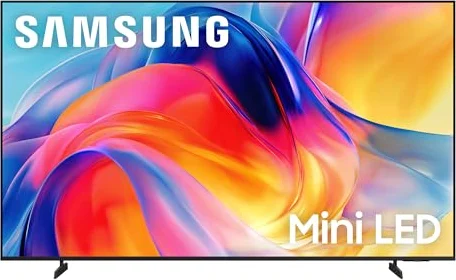
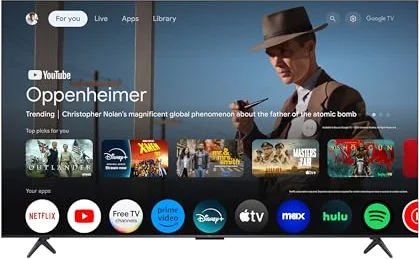
Key Specs Compared
| Feature | Samsung 65" M70H Mini LED 4K Smart TV (2026) | Editor's Pick TCL 65" QM6K QD-Mini LED 144Hz Smart TV |
|---|---|---|
| Price Band | Entry | Entry |
| Local Dimming | None (software only; Samsung, RTINGS) | Full-array Mini-LED |
| Native Refresh | 60Hz | 144Hz |
| HDMI | 3x HDMI 2.0 (4K/60) | 4 HDMI, 2x HDMI 2.1 (4K/144) |
| HDR Formats | HDR10+, HDR10 | Dolby Vision, HDR10+, HLG |
| Smart Platform | Tizen | Google TV |
| RTINGS Mixed Usage | 5.6 | 7.1 (75" tested) |
| Check Price | Check Price |
RTINGS tested the 65-inch M70H and the 75-inch QM6K; its findings probably apply to the other sizes but were not measured on them.
Where Each TV Wins
Local Dimming and Contrast QM6K Wins
This is the heart of the comparison. A Mini-LED backlight earns its name by dimming in zones, so a bright moon can sit next to a black sky without the whole picture going grey. The QM6K does this; RTINGS notes some haloing around bright objects, which is normal for an entry Mini-LED, and TCL quotes up to 500 zones for the series.
The M70H does not. Samsung's spec sheet footnotes its "Supreme Mini LED Dimming" as "Software-based (not full-array hardware-based)", Samsung confirmed the software-based approach to Tom's Guide, and RTINGS found the M Series TVs "lack local dimming entirely", with only a global dimming feature that brightens or darkens the whole screen. What the M70H does have is a VA panel whose native contrast RTINGS rates very good, so blacks still look reasonably deep in a dim room. In dark scenes with bright highlights, though, the TCL's dimming is the difference you will see.
Brightness and HDR QM6K Wins
RTINGS rates the QM6K's SDR brightness high and its HDR brightness mediocre; it rates the M70H's HDR brightness bad and its SDR brightness poor, calling it "too dim to deliver an impactful HDR experience". Netzwelt measured about 308 nits on the European 55-inch M70H. The QM6K also supports Dolby Vision as well as HDR10+, while the M70H has HDR10+ only.
Gaming QM6K Wins
The QM6K has a native 144Hz panel and two HDMI 2.1 ports that take 4K at up to 144Hz, with wide-range VRR, so a PS5 or Xbox Series X can run at 4K/120. The M70H is a native 60Hz TV, and all three of its HDMI ports are limited to 4K at 60Hz. Samsung advertises "DLG 120Hz", but RTINGS found the M70H ignores every second frame of a 1080p/120Hz signal, so it is not real 120Hz. In the M70H's favour, RTINGS rates its input lag very low, and it supports ALLM and HGiG, so 60fps games feel responsive.
Colour QM6K Wins
The QM6K is a quantum-dot (QLED) Mini-LED. The M70H has no quantum dots; it uses a KSF phosphor, and RTINGS measured about 82% of the DCI-P3 colour space in SDR, wider than Samsung's Crystal UHD models but, in RTINGS' words, unable to "display a wide range of reds".
Smart Platform Depends on Your Home
The M70H runs Samsung's 2026 Tizen with Samsung TV Plus, AirPlay, Google Cast and the Gaming Hub, and Samsung promises Tizen OS upgrades for up to seven years on its 2026 models. RTINGS found the M70H's interface "noticeably slow", and home-screen ads cannot be fully turned off. The QM6K runs Google TV with Chromecast built in. If your household already lives in Samsung's apps, that may outweigh the picture gap; for everyone else, it is a wash.
Price Samsung 65" M70H Costs Less
The TCL 65" QM6K is modestly more expensive. With the QM6K you get real local dimming, 144Hz, HDMI 2.1 and Dolby Vision, which is why it is the better use of the money for most buyers.
Who Should Get Which?
Get the TCL 65" QM6K if...
- You bought into Mini-LED for deeper contrast in films and dark games (see is Mini-LED worth it?)
- You own a PS5 or Xbox Series X and want 4K/120 with VRR (see our best TVs for PS5 and Xbox)
- You watch Dolby Vision content on Netflix, Disney+ or Apple TV+
- Your room is fairly bright and you need more brightness than the M70H can give
Get the Samsung 65" M70H if...
- You want Samsung's Tizen interface, Samsung TV Plus and a long software-support promise
- You mostly stream TV shows, news and sport in a dim or moderately lit room
- You game casually at 60fps and value the very low input lag
- Saving money matters more to you than HDR performance
Frequently Asked Questions
Is the Samsung M70H a real Mini-LED TV like the TCL QM6K?
Not in the way that matters for picture quality. The point of Mini-LED is local dimming: the backlight dims in zones, so bright objects can sit next to deep blacks. Samsung's own US spec sheet footnotes the M70H's "Supreme Mini LED Dimming" as "Software-based (not full-array hardware-based)", and RTINGS, which bought a 65-inch set, found it lacks local dimming entirely. The TCL QM6K has a full-array Mini-LED backlight with local dimming.
Which is better for PS5 and Xbox Series X?
The TCL QM6K, clearly. It has a native 144Hz panel and two HDMI 2.1 ports that accept 4K at up to 144Hz, with wide-range VRR, so consoles can run at 4K/120. The M70H is a native 60Hz TV with three HDMI 2.0 ports (4K at 60Hz), and RTINGS found its "DLG 120Hz" mode simply drops every second frame of a 1080p/120Hz signal. The M70H does have very low input lag for 60fps games.
Which TV is brighter?
The QM6K. RTINGS rates the QM6K's SDR brightness high and its HDR brightness mediocre, while it rates the M70H's HDR brightness bad and SDR brightness poor. Germany's Netzwelt measured about 308 nits on the European 55-inch M70H. Neither is a brightness champion in HDR, but the TCL is the better choice for a brighter room.
Do they support Dolby Vision?
The TCL QM6K supports both Dolby Vision and HDR10+. The Samsung M70H supports HDR10+ but not Dolby Vision, which Samsung does not use on any of its TVs.
Is there any reason to choose the M70H?
Yes, if you specifically want Samsung's Tizen interface, Samsung TV Plus, or Samsung's promise of Tizen OS upgrades for up to seven years on its 2026 models, and you mostly stream TV shows and sport in a dim or moderately lit room. RTINGS rates its native contrast very good for an LCD without dimming.
Ready to Buy?
Also Compare
Sources
This comparison is based on the manufacturers' published specifications and on lab measurements and reviews by the outlets below. We have not tested either TV ourselves; where a figure comes from a specific reviewer, it says so.
- Samsung USA, M70H spec sheet (2026)
- RTINGS, Samsung M70H review (65")
- RTINGS, TCL QM6K review (75" tested)
- Netzwelt, Samsung M70H test (European 55" GU55M70H)
- Tom's Guide, Samsung confirms software-based Mini LED dimming (4 Sep 2026)
- TechRadar, TCL QM7K review (QM6K zone context)