Amazon Ember 75" QLED Series with Fire TV (2025) Review 2026
Amazon's biggest QLED: 75 inches of Alexa, full-array local dimming, and relentless interface ads. The smart home integration is unmatched. The value proposition at this price is not.
New name, same TV. In 2026 Amazon renamed its own TVs: the Fire TV Omni QLED Series (2025) is now sold as the Amazon Ember QLED Series with Fire TV. The hardware has not changed, so this review still applies.
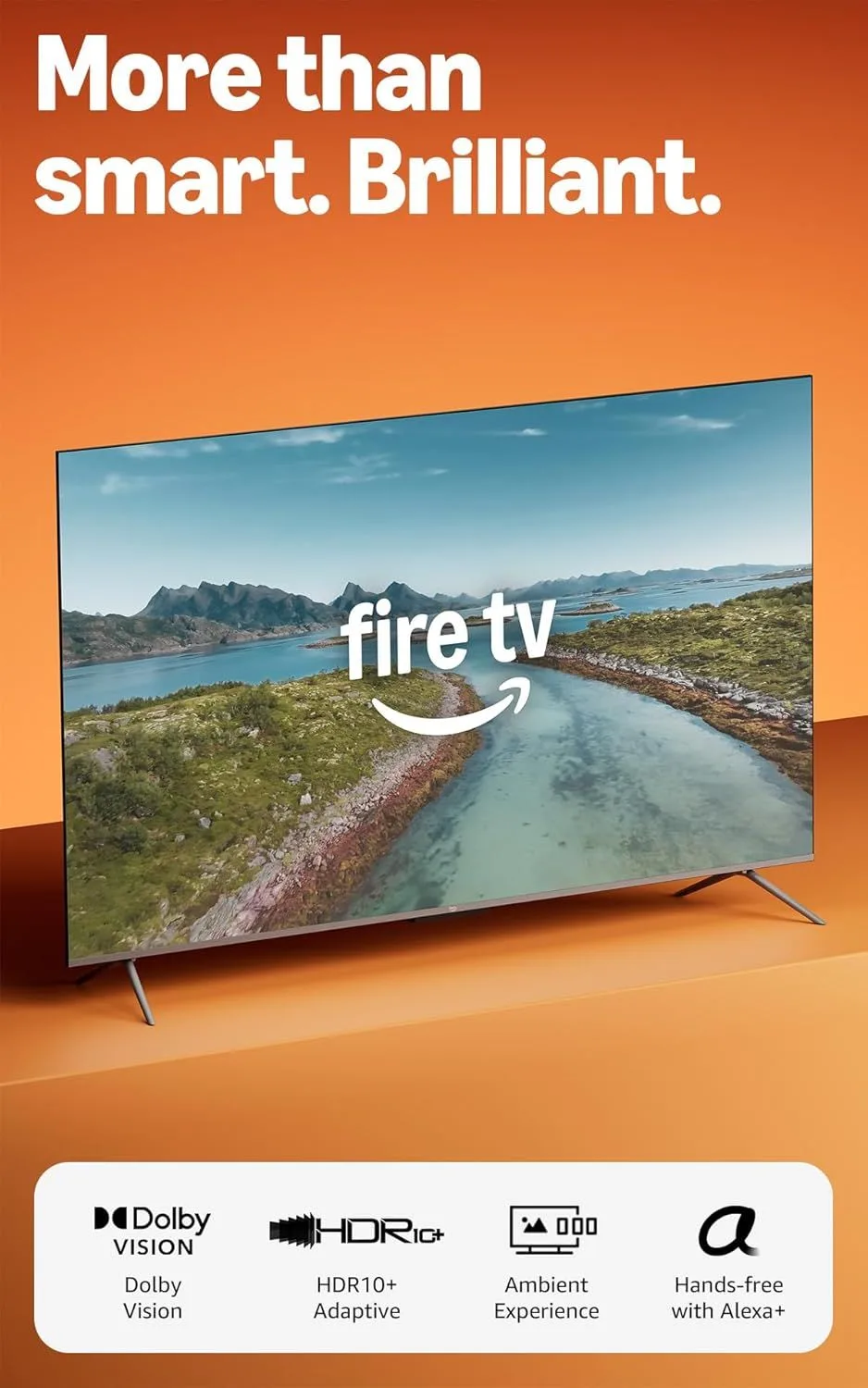
Amazon's 75" Ember QLED is the ultimate Fire TV showcase. But at a Flagship price, you're paying heavily for the Alexa ecosystem when Mini-LED TVs offer dramatically better picture quality for similar money.
The Alexa Centerpiece
Amazon designed this TV to be the biggest screen in your Alexa ecosystem. The built-in far-field microphones turn it into a 75-inch Echo Show. Say "Alexa, show me the front door" and your Ring doorbell feed appears as picture-in-picture while you watch football. Say "Alexa, dim the lights and play The Bear" and the living room adjusts while Hulu loads.
No other 75-inch TV integrates this deeply with a smart home platform. Samsung's SmartThings and LG's ThinQ approach similar territory, but Amazon owns the voice assistant and the smart home device ecosystem. If your home runs on Ring cameras, Echo devices, and Alexa routines, this TV is the control center that ties it all together.
That integration is the entire pitch. Strip it away, and you have a QLED at a Flagship price competing against Mini-LED TVs that cost less.
Ads at Premium Pricing
The home screen opens with a full-width banner ad. Below it: sponsored content rows, app suggestions Amazon gets paid to surface, and recommendations algorithmically tuned to sell you things. The screensaver -- Ambient Experience -- intersperses art and weather with promotional content.
At budget pricing, ads subsidize the hardware. That trade-off makes sense on a budget Fire TV. At a Flagship price, the same ad density feels disrespectful. Samsung's Tizen has ads too, but Samsung's comparable QLEDs cost less. The Roku 75" Pro runs a cleaner interface.
The built-in microphones are always listening by default. Disable the mic array using the physical button on the TV when you do not want voice interaction. You can also manage voice history deletion in the Alexa app. Review the Fire TV privacy settings during initial setup -- several data-sharing toggles are enabled by default.
The Panel Underneath the Platform
Strip away Fire TV and Alexa, and the hardware is a solid 75-inch QLED with full-array local dimming. QLED quantum dots produce vivid color. Dolby Vision and HDR10+ Adaptive provide broad HDR format support. It is a 60Hz panel, though, so PS5 and Xbox games run at up to 60fps, not 120.
What it lacks: the dimming precision, brightness and refresh rate of Mini-LED rivals. At 75 inches and Flagship pricing, that is a real limitation. The Roku 75" Pro is a 120Hz Mini-LED with full-array local dimming (similarly priced). The TCL 75" T7 delivers Mini-LED with 144Hz at modestly more expensive. On picture performance alone, the Amazon is outclassed by cheaper alternatives.
Strengths
- ✓75" QLED with full-array local dimming and full Ambient Experience
- ✓Deepest Alexa integration and smart home hub features
- ✓Dolby Vision and HDR10+ Adaptive support
Cons
- ✗Premium pricing for 75" QLED territory
- ✗60Hz panel: no 4K/120Hz console gaming
- ✗Fire TV ads throughout the interface
- ✗Limited local dimming compared to Mini-LED alternatives at this price
Ambient Experience at 75 Inches
The Ambient Experience -- Amazon's always-on display mode -- is more impressive at 75 inches than at any smaller size. Art displays fill a wall. The weather dashboard is readable from across a large room. Calendar widgets, news headlines, and smart home device status panels turn the TV into a living room information center when nobody is actively watching content.
The trade-off is power consumption and ad exposure. Ambient mode draws 60-80W compared to 0.5W in standby. And the rotating content includes promotional material that Amazon does not let you fully disable. It is a compelling feature wrapped in a monetization strategy.
The Honest Cost of Alexa at 75 Inches
At a Flagship price, you are paying a substantial premium for the Alexa ecosystem wrapped around a QLED panel. The Roku 75" Pro, a 120Hz Mini-LED, offers stronger picture hardware with a cleaner interface. The TCL 75" T7 offers dramatically better picture quality (Mini-LED, 144Hz) at a lower price. The Samsung 75" Q7F offers similar QLED specs at a lower price with Tizen instead of Fire TV.
The Amazon Ember 75" QLED makes financial sense only if the smart home integration is worth the premium over every competing 75-inch TV. For deep Alexa households with Ring cameras, smart locks, and complex routines -- it might be. For everyone else, the TV market offers far more picture quality per dollar.
Frequently Asked Questions
Is the Amazon Ember 75" QLED worth it over cheaper 75" QLEDs?
Only if Alexa smart home integration is your primary TV feature. It is a 60Hz panel, so it is not a 120Hz gaming TV, and for picture quality alone the Roku 75" Pro (a 120Hz Mini-LED) and the TCL 75" T7 (Mini-LED with 144Hz, for less) are stronger choices. The Amazon premium buys the Alexa ecosystem, not picture quality.
How bad are the ads on the Amazon Ember QLED?
Prominent. The home screen features a large banner ad at the top, sponsored content rows, and app suggestions you did not ask for. Ambient Experience mode on the screensaver shows ads. At a Flagship price, many buyers find the ad density frustrating. You cannot disable them.
Does the Ambient Experience work well on a 75" screen?
The visual impact is strong. Art displays, clock widgets, weather dashboards, and news tickers look impressive at 75 inches in a living room. The caveat: Ambient Experience includes sponsored content, and the TV consumes roughly 60-80W in ambient mode versus 0.5W when truly off.
Can I use the Amazon Ember 75" QLED as a smart home hub?
Yes, and this is where it separates from competitors. The built-in microphones work as a full Echo device. Ring doorbell feeds pop up as picture-in-picture. Alexa routines control lights, locks, and thermostats from the TV screen. If your home runs on Alexa, no other 75" TV integrates as deeply.
Should I get the Ember QLED or the Ember Mini-LED at 75"?
The Ember Mini-LED costs significantly more and offers better contrast and brightness. But both run the same Fire TV with the same ads. If you want Mini-LED performance, the TCL 75" T7 or QM6K offer far better value outside the Fire TV ecosystem. The Ember QLED is the smarter Amazon buy if you need the platform.
Final Verdict
Amazon's 75" Ember QLED is the ultimate Fire TV showcase. But at a Flagship price, you're paying heavily for the Alexa ecosystem when Mini-LED TVs offer dramatically better picture quality for similar money.
Buy it if your home runs on Alexa and you want the deepest smart home integration at 75 inches. Skip it if picture quality matters more than platform -- Mini-LED alternatives deliver far more for less.