Hisense 75" E7 Mini-LED 4K Fire TV (75E7SF, 2026) Review 2026
The 75-inch E7 is Hisense's cheapest 2026 way into a big Mini-LED screen, and it takes the place of the 75-inch QD7QF in Hisense's range. On paper it is a sideways step: 144Hz and two HDMI 2.1 ports, like the QD7QF at this size, in a slimmer body. No reviewer has tested it yet, so this page sets out what Hisense's specifications do and don't tell you.
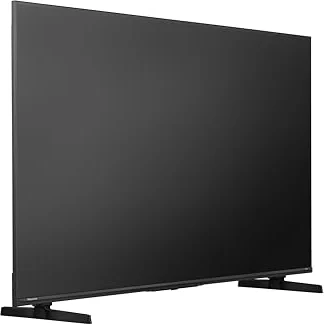
The 75" E7 matches the 75" QD7QF on 144Hz and HDMI 2.1 and spreads 144 dimming zones over a big screen. With no reviews yet, it is a budget big-screen option to watch rather than a proven pick; the reviewed Hisense U6 Pro is the step up.
No Expert Reviews Yet
As of October 2026, no lab or expert review of the E7 has been published: RTINGS, Tom's Guide, TechRadar and CNET have not covered it. This page is therefore built on Hisense's published specifications and on how they compare with the model the E7 replaces in Hisense's range. Hisense has published no measured brightness, contrast or input-lag figures, so we make no claims about picture quality. We'll update this page when independent measurements appear.
One more caveat: we could not read Hisense's US product page, so the specifications below come from Hisense Canada's page for the same model number. Those pages contain some template errors elsewhere, so treat the finer details as provisional.
Where the E7 Fits
The E7 is Hisense's 2026 entry-level Mini-LED with Fire TV, sitting below the U6 and U6 Pro. No source states that it is the official successor to the 2025 QD7QF, but it takes that model's place in the range: same tier, same Fire TV platform, the same spread of sizes, and no 2026 QD7 model has appeared.
What Changed From the 75-Inch QD7QF
At 75 inches the 2025 QD7QF was already a 144Hz TV with two HDMI 2.1 ports, so the E7 doesn't add much for gamers here; the bigger gaming change in the E7 range is at 55 inches, where the old model was 60Hz (see our 55-inch E7 page).
The listed differences at 75 inches are small: FreeSync Premium Pro instead of Premium, Bluetooth 5.4 instead of 5.0, a slimmer body (about 2.5 inches deep, from 3.0), and speakers listed at 20W where the 75-inch QD7QF had 30W. That last figure comes from Hisense Canada's page and may be an error; it's worth checking the box or the US listing if built-in sound matters. Hisense now publishes a zone count (144) and a 600-nit brightness rating, which it didn't for the QD7QF.
Key Specifications
- Backlight: full-array Mini-LED with 144 local dimming zones, which Hisense lists at every size from 50 to 85 inches. That is a modest count: the Hisense U7 has 960 zones at 65 inches.
- Brightness: rated "up to 600 nits", a modest figure for HDR. The step-up U6 Pro measured about 1,265 nits in Tom's Guide and TechRadar's shared lab.
- HDR: Dolby Vision, Dolby Vision IQ, HDR10, HDR10+ and HLG, plus Filmmaker Mode.
- Gaming: native 144Hz, VRR from 48Hz to 144Hz, ALLM and AMD FreeSync Premium Pro (one sponsored deal post says Premium; we follow Hisense), with 4K at up to 144Hz on the two HDMI 2.1 ports.
- Connections: four HDMI ports (two HDMI 2.1, two HDMI 2.0), eARC on HDMI 1, Wi-Fi 5 and Bluetooth 5.4. Hisense doesn't say whether HDMI 1 is one of the 2.1 ports, so plan to connect a console to a 2.1 port and a soundbar to HDMI 1.
- Platform: Fire TV with Alexa built in and a far-field microphone for hands-free voice, plus AirPlay and HomeKit.
- Sound: 20W, two-channel, with Dolby Atmos support and DTS Virtual:X processing.
- Tuner: ATSC 1.0; no NextGen TV (ATSC 3.0) is listed.
- Size and mounting: about 54.7 pounds without the stand, feet that fit in two positions (wide or close together, for narrower furniture), VESA 500 x 400.
For 120Hz or 144Hz gaming, plug the console into one of the two HDMI 2.1 ports. The other two ports top out at 4K/60Hz.
Strengths
- ✓75 inches with native 144Hz and two HDMI 2.1 ports
- ✓Dolby Vision and HDR10+ with full-array Mini-LED dimming
- ✓Slimmer than the 75" QD7QF it replaces in the range (about 2.5 inches deep)
Cons
- ✗No expert or lab reviews yet, so picture quality is unverified
- ✗Only 144 dimming zones across a 75" screen; rated 600 nits
- ✗20W speakers, listed lower than the 75" QD7QF's 30W
Who Should Consider the E7
It suits buyers who want the biggest screen for the money for streaming and console gaming, Fire TV and Alexa households, and rooms where you can control the light.
Look elsewhere if your room is bright (a rated 600 nits and no anti-glare coating are listed; the matte Hisense 65" U6 Pro is the reviewed alternative), you want strong built-in sound, or you'd rather buy a TV whose picture has been independently measured.
If you own the older model, our Hisense 75" QD7QF review stays online for reference.
Frequently Asked Questions
Has the Hisense E7 been reviewed?
Not yet. As of October 2026, no lab or expert review of the E7 has been published, and Hisense has not released measured brightness or input-lag figures. This page relies on Hisense's specifications.
Is the 75-inch E7 better than the 75-inch QD7QF?
On paper it is very similar. Both are 144Hz with two HDMI 2.1 ports. The E7 adds FreeSync Premium Pro and Bluetooth 5.4 and is slimmer, but Hisense Canada lists its speakers at 20W against the QD7QF's 30W. Without independent measurements, picture quality can't be compared.
Will the stand fit on my TV unit?
The 75-inch E7 has feet that can be fitted in two positions: wide apart (about 54 inches) or close together (about 16 inches), according to Hisense Canada. The narrow position suits smaller TV stands.
How many dimming zones does the 75-inch E7 have?
Hisense Canada lists 144 zones, the same as the smaller sizes. Spread across a 75-inch screen, that is a low count; Amazon's listing mentions "thousands" of light zones, which doesn't match Hisense's own figure.
Final Verdict
The 75" E7 matches the 75" QD7QF on 144Hz and HDMI 2.1 and spreads 144 dimming zones over a big screen. With no reviews yet, it is a budget big-screen option to watch rather than a proven pick; the reviewed Hisense U6 Pro is the step up.
Sources
This page is based on the manufacturer's published specifications and the sources below. We have not tested the TV ourselves, and no independent review of the E7 existed when it was written.