TCL 75" QM8K vs Samsung 75" QN90F: Which 75" Mini-LED Wins in 2026?
Two flagship 75-inch Mini-LED TVs fighting for the same living room wall. The TCL QM8K pushes raw brightness to approximately 2,500 nits with 165Hz gaming. The Samsung QN90F counters with the industry's best anti-reflection coating, 60W of Object Tracking Sound+, and Samsung's ecosystem polish. The QM8K is modestly more expensive the QN90F. Which 75-inch flagship delivers the better living room experience?
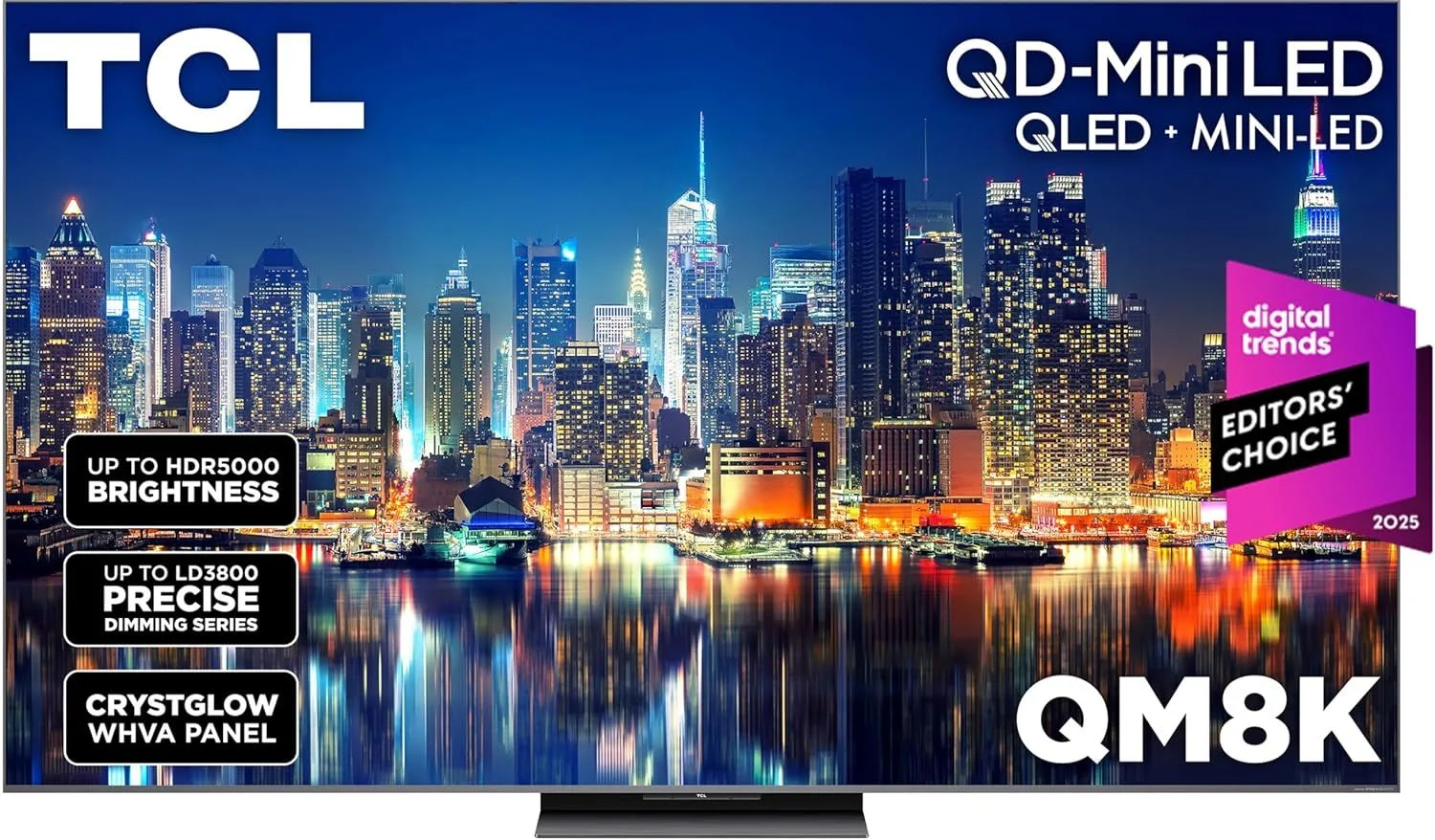
TCL 75" QM8K
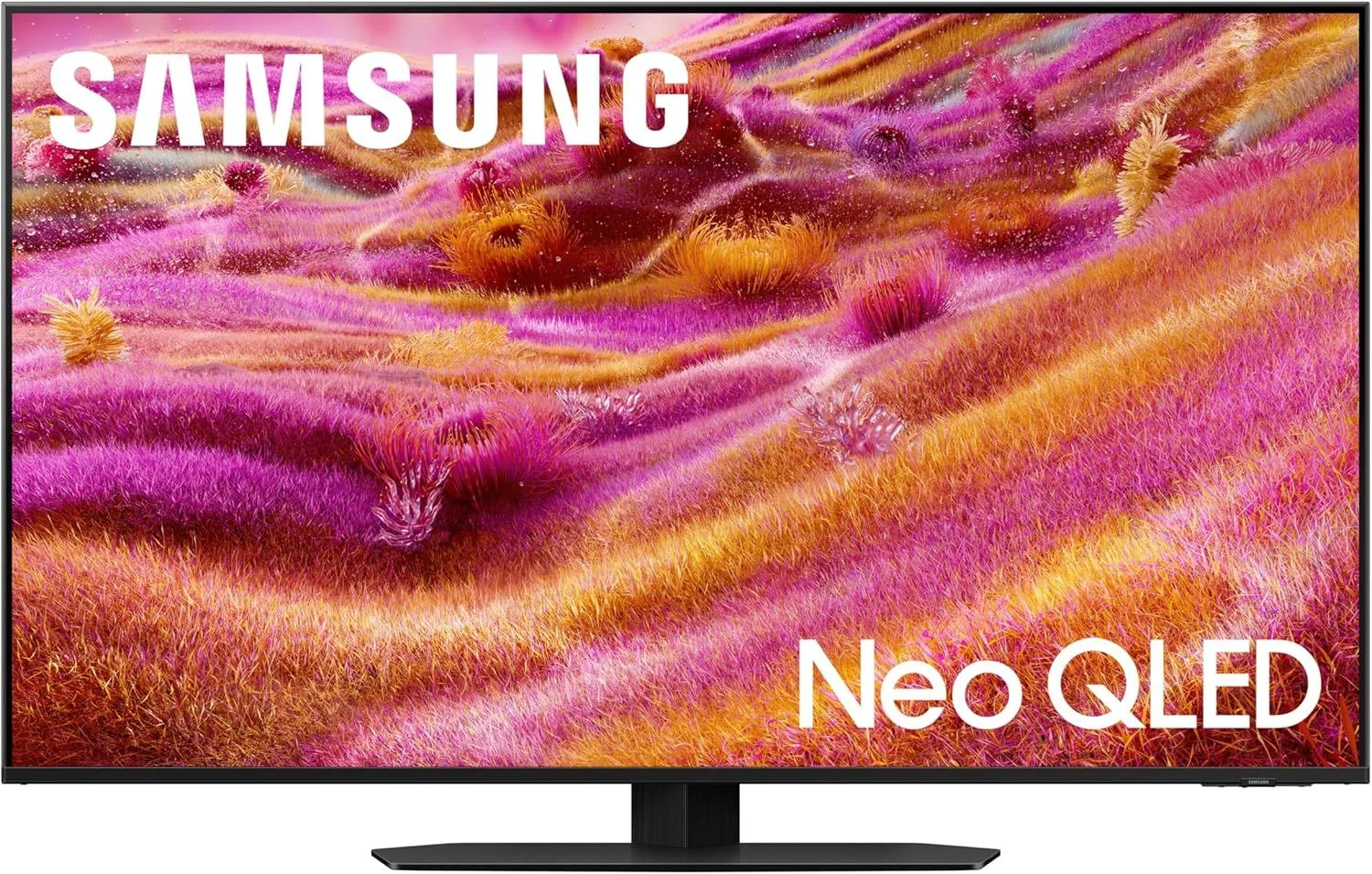
Samsung 75" QN90F
Verdict: Buy the TCL 75" QM8K if you want the brightest possible picture with Dolby Vision, 165Hz gaming, and Google TV — and you are comfortable with TCL's brand at a premium price point. Buy the Samsung 75" QN90F if your room has reflection problems, you value built-in audio quality, or you prefer Samsung's ecosystem and brand reliability. Both are excellent 75-inch Mini-LEDs. The decision comes down to brightness vs anti-glare and platform preference.
Full Specs Comparison
| Feature | TCL 75" QM8K QD-Mini LED Premium 144Hz Smart TV | Samsung 75" QN90F Neo QLED 4K Mini LED Smart TV (2025) |
|---|---|---|
| Price Range | $1,800+ | $1,200–$1,800 |
| Screen Size | 75" | 75" |
| Panel Type | Mini-LED | Neo QLED (Mini-LED) |
| Resolution | 4K UHD | 4K UHD |
| Refresh Rate | 165Hz | 144Hz |
| HDR Formats | HDR10+, Dolby Vision, HLG | HDR10+, HLG |
| Smart Platform | Google TV | Tizen |
| Check Price | Check Price |
The Head-to-Head Breakdown
Peak Brightness & HDR Impact QM8K Wins
The QM8K reaches approximately 2,500 nits of peak brightness — the highest we have measured on any 75-inch TV in 2026. The QN90F hits roughly 2,000 nits. In HDR content, this 500-nit gap shows in specular highlights: a sun reflection on water, a fireworks burst, a lightsaber blade. The QM8K's highlights physically hit harder. For dark room HDR viewing, this brightness advantage translates to more impactful high dynamic range.
The Halo Control System on the QM8K also reduces blooming — the bright halo around objects in dark scenes that plagues Mini-LED TVs. Samsung's local dimming is competent but the QM8K's dedicated anti-blooming technology handles difficult scenes (white text on black backgrounds, star fields) more cleanly.
Anti-Glare & Bright Room Performance QN90F Wins
Samsung's anti-reflection coating virtually eliminates visible reflections on the screen surface. Windows, overhead lights, white furniture — none of it appears on the QN90F's screen. The QM8K uses a standard glossy panel. In a room with windows opposite or beside the TV, the QN90F provides a significantly better viewing experience despite lower raw brightness.
This is the single biggest differentiator between these two TVs. If your room has reflection problems, Samsung's coating is worth more than TCL's extra 500 nits. If your room has diffused ambient light without direct reflections, the QM8K's brightness advantage wins.
Gaming Performance QM8K Wins
The QM8K runs at 165Hz — the highest refresh rate on any 75-inch TV. The QN90F runs at 144Hz. Both support VRR and ALLM. Both have four HDMI 2.1 ports. In practice, the 21Hz difference between 144Hz and 165Hz is barely perceptible, but the QM8K's spec sheet advantage is real.
The QM8K also runs Google TV, which means native PlayStation and Xbox controller pairing and a wider selection of game-related apps. Samsung Gaming Hub on the QN90F offers cloud gaming through Xbox Game Pass, GeForce Now, and Amazon Luna — a different gaming advantage that does not require owning a console.
Audio Quality QN90F Wins
The QN90F's 60W Object Tracking Sound+ system is one of the best built-in TV audio setups available. It uses multiple speakers positioned around the TV to track on-screen action — a car moving left to right produces sound that follows it. Built-in Dolby Atmos adds height simulation. For buyers who do not want a separate soundbar, the QN90F sounds dramatically better than the QM8K's 30W system.
The QM8K's audio is adequate for casual viewing but thin and lacking bass. Most buyers at this price level will add a soundbar, which equalizes this advantage. But out of the box, Samsung's audio engineering is clearly superior.
HDR Format Support QM8K Wins
The QM8K supports HDR10+, Dolby Vision, and HLG — covering every major format. The QN90F supports HDR10+ and HLG only. No Dolby Vision. Netflix, Disney+, and Apple TV+ master most premium content in Dolby Vision. On the QN90F, this content falls back to standard HDR10, which uses static metadata instead of Dolby Vision's scene-by-scene dynamic optimization.
For movie and streaming enthusiasts, this is a meaningful advantage for the TCL. Dolby Vision content genuinely looks better than HDR10 on a capable TV — better highlights, better shadow detail, better tone mapping.
Smart Platform & Ecosystem Tie
The QM8K runs Google TV with Chromecast built in, the full Google Play Store, and tight Android phone integration. The QN90F runs Tizen with Samsung's ecosystem — SmartThings integration, Samsung phones, and Gaming Hub. Both handle major streaming apps identically. Neither is better — it depends on your phone and smart home ecosystem. Android users will prefer Google TV. Galaxy users will prefer Tizen.
The Price Factor
The QM8K sits at $1,800+ and the QN90F at $1,200–$1,800. The TCL is modestly more expensive. For buyers choosing between them, the QM8K offers more raw performance per dollar — more brightness, higher refresh rate, and Dolby Vision support. The QN90F's premium buys anti-reflection coating, superior audio, and Samsung's brand reliability.
At this price level, both TVs are competing with the best OLED TVs at 55-65 inches. The value proposition of a 75-inch Mini-LED over a 55-inch OLED depends on your room size and viewing distance — bigger screen versus better per-pixel contrast.
Who Should Get Which?
Get the TCL 75" QM8K if...
- Maximum brightness is your priority — 2,500 nits overpowers any ambient light
- You care about Dolby Vision for movie watching and streaming
- You want the fastest gaming panel at 75" — 165Hz with VRR
- You prefer Google TV's platform and Chromecast integration
- Your room does not have direct window reflections aimed at the screen
Get the Samsung 75" QN90F if...
- Your room has windows that cause reflections on the screen — Samsung's coating is the fix
- Built-in audio quality matters — 60W OTS+ eliminates the need for a soundbar
- You prefer Samsung's brand reliability and service network
- You are invested in Samsung's ecosystem (Galaxy phone, SmartThings, QLED lineup)
- You want a TV for a bright room where glare is the main challenge
Frequently Asked Questions
Which is brighter — the QM8K or the QN90F?
The TCL QM8K is brighter, reaching approximately 2,500 nits peak versus the Samsung QN90F at roughly 2,000 nits. In HDR content, the QM8K's highlights hit harder. For bright-room viewing where raw brightness overpowers ambient light, the TCL has a measurable advantage.
Does Samsung's anti-reflection coating make up for fewer nits?
In rooms with direct window reflections — yes. A 2,000-nit TV with zero reflections can look better than a 2,500-nit TV showing your living room reflected on screen. If your room has windows opposite or beside the TV, Samsung's coating is the bigger upgrade. If your room has diffused ambient light without direct reflections, TCL's extra brightness wins.
Which has better gaming features?
The TCL QM8K runs at 165Hz — the fastest available at 75 inches. The Samsung QN90F runs at 144Hz with four full HDMI 2.1 ports. Both are excellent for gaming. The QM8K's 165Hz is technically faster, but the real-world difference between 144Hz and 165Hz is minimal. Samsung Gaming Hub adds cloud gaming access if that matters to you.
Does the QM8K have Dolby Vision and the QN90F doesn't?
Correct. The QM8K supports Dolby Vision, HDR10+, and HLG. The QN90F supports HDR10+ and HLG only — no Dolby Vision. For Netflix, Disney+, and Apple TV+ content mastered in Dolby Vision, the TCL displays it natively while the Samsung falls back to HDR10. This is a real content advantage for the TCL.
Which has better sound?
The Samsung QN90F has 60W of Object Tracking Sound+ with Dolby Atmos — one of the best built-in speaker systems on any TV. The QM8K has a 30W speaker system that sounds adequate but unremarkable. If you plan to use the TV's built-in speakers without a soundbar, Samsung has a significant audio advantage.
Is TCL as reliable as Samsung?
TCL has built a strong reputation for value and reliability over the past five years, but Samsung has decades of brand trust and wider service network coverage. The QM8K is a new 2025 model with limited long-term data. Samsung's QN-series has a longer track record. For peace of mind, Samsung's brand carries more weight. For raw specs per dollar, TCL wins.
Ready to Buy?
Also Compare
Still Deciding?
Track Both Products
We'll email you if either price drops or availability changes.
Only when something changes. Unsubscribe anytime.