Samsung 65" Q7F QLED vs TCL 65" T7: Which Is Better in 2026?
A QLED from Samsung against a Mini-LED from TCL. Two completely different backlighting technologies at the 65-inch sweet spot, and the price gap between them is tighter than you'd expect. The Q7F is modestly more expensive than the T7. One trades on brand confidence; the other trades on sheer hardware advantage.
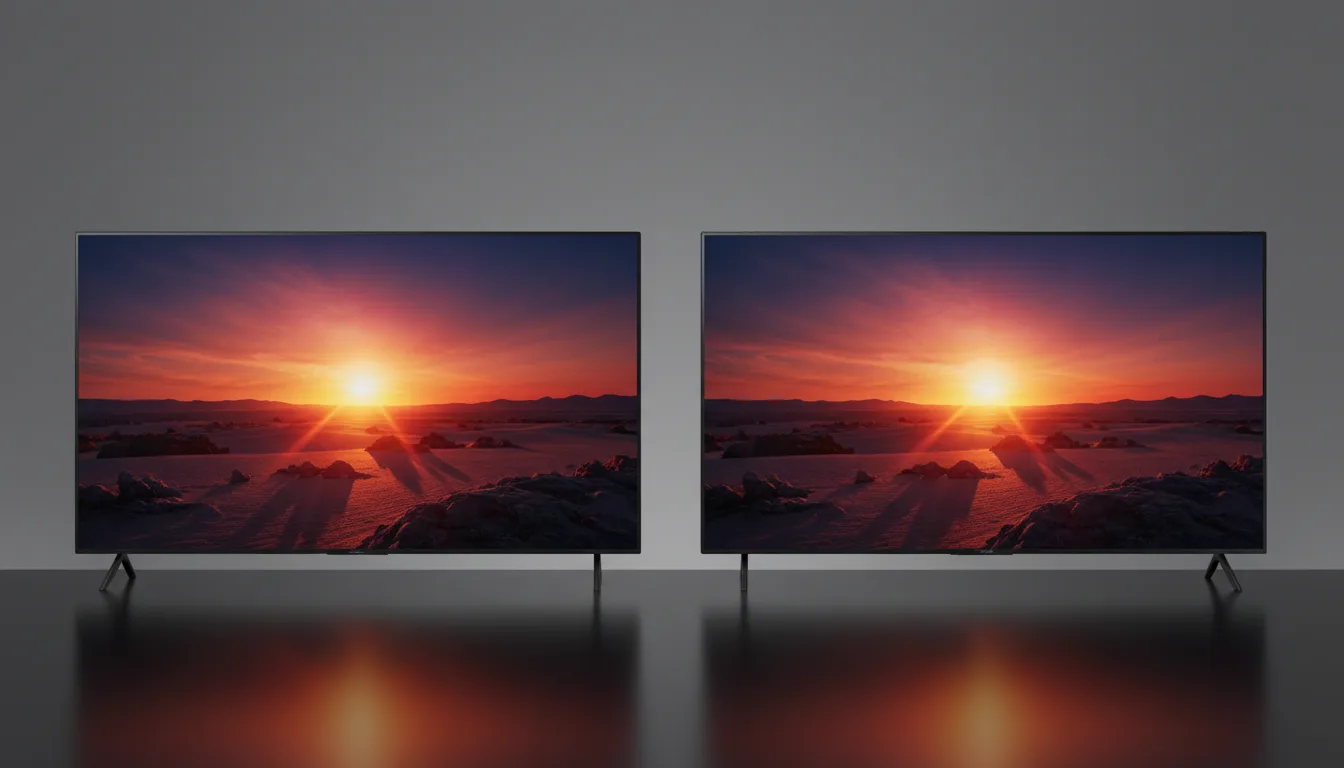
Verdict: The TCL 65" T7 wins on picture quality — Mini-LED with ~500 dimming zones, 144Hz, and Dolby Vision outclass edge-lit QLED on every measurable spec. The Samsung 65" Q7F QLED wins on ecosystem and polish — Samsung's anti-reflection coating, Tizen responsiveness, and Gaming Hub are real advantages for the right buyer. For most people watching in a typical living room, the T7 delivers a visibly better image.
Full Specs Comparison
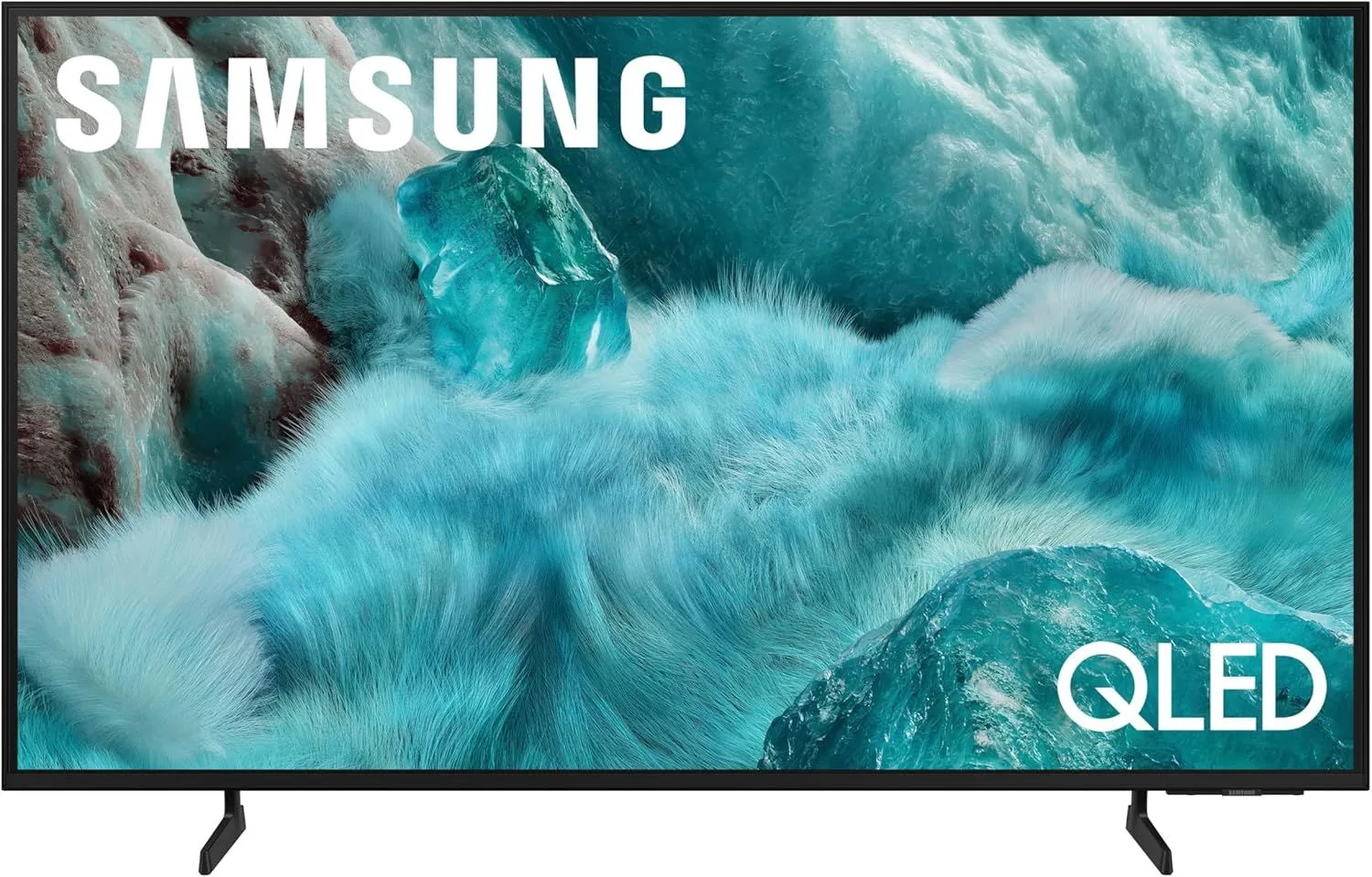
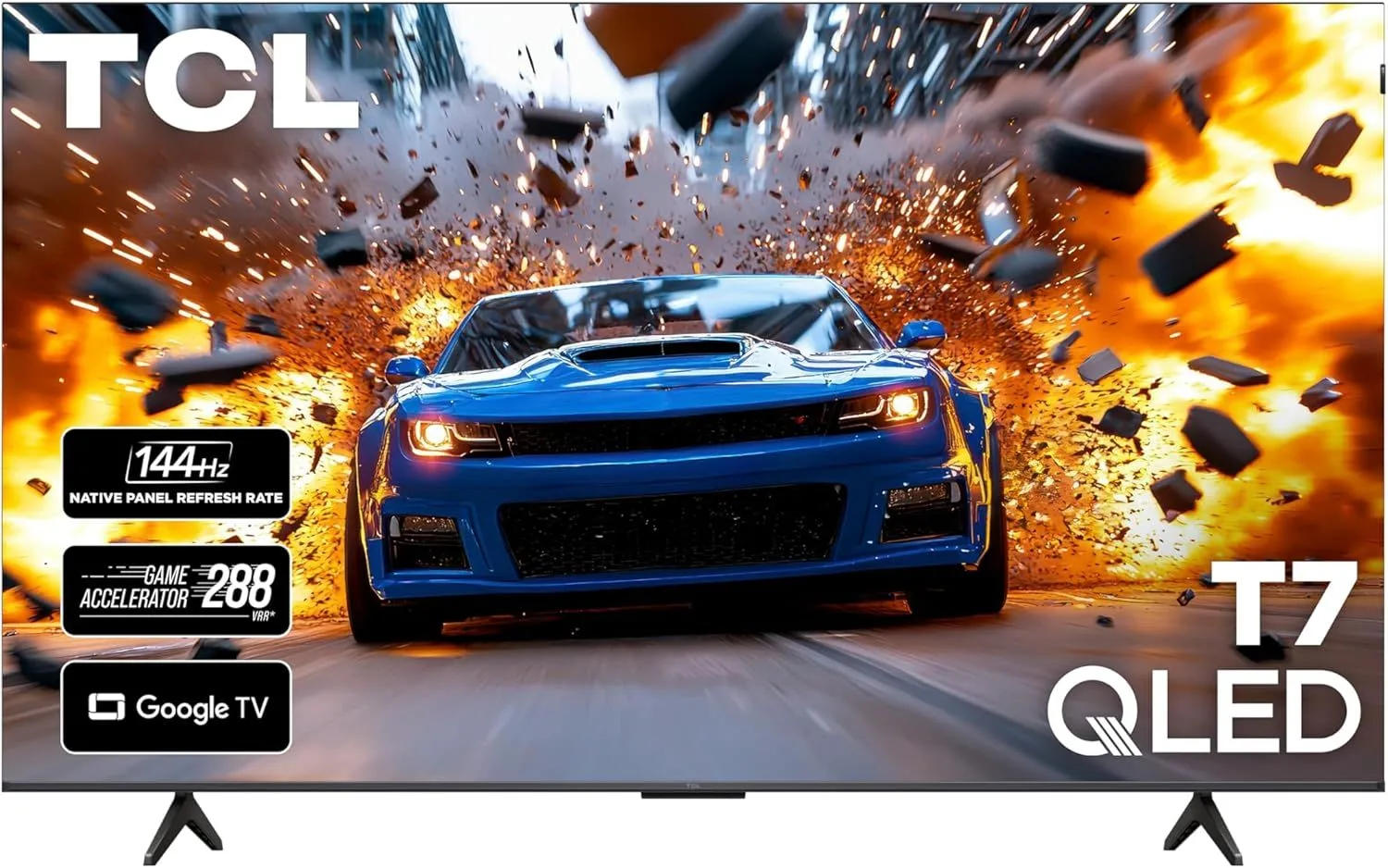
| Feature | Samsung 65" Q7F QLED Smart TV (2025) | TCL 65" T7 Mini-LED 144Hz Smart Google TV |
|---|---|---|
| Price Range | $300–$500 | $500–$800 |
| Screen Size | 65" | 65" |
| Panel Type | QLED | Mini-LED |
| Resolution | 4K UHD | 4K UHD |
| Refresh Rate | 120Hz | 144Hz |
| HDR Formats | HDR10+, HLG | HDR10+, Dolby Vision, HLG |
| Smart Platform | Tizen | Google TV |
| Check Price | Check Price |
The Technology Gap Explained
These two TVs represent fundamentally different approaches to backlighting. The Samsung Q7F is a QLED — a quantum dot color layer sitting over an edge-lit LED backlight with no independent dimming. The TCL T7 is a Mini-LED — hundreds of tiny LEDs packed behind the panel, organized into roughly 500 zones that brighten and dim independently. That distinction drives every performance difference in this comparison.
Head-to-Head Breakdown
Contrast & Black Levels TCL T7 Wins
The defining category. The T7's ~500 Mini-LED zones can keep a dark sky pitch-black while a streetlight in the corner of the frame burns bright. The Q7F's edge-lit backlight has no zone control — the entire panel brightens when any bright element appears, lifting blacks to a washed-out gray. Dark thrillers, space scenes, dimly lit dramas: the T7 produces an image that looks like it belongs in a higher price class. The Q7F looks flat and hazy by comparison.
Sitting in a dimmed room with both TVs showing the same dark scene, the gap is immediately obvious to anyone. The T7's Mini-LED backlight is the single biggest reason to choose it. Edge-lit corners on the Q7F also produce visible light bleed during black screens — bright patches in the corners that Mini-LED zone control almost entirely eliminates.
HDR Brightness & Highlight Detail TCL T7 Wins
The T7 reaches approximately 1500 nits peak brightness. The Q7F, limited by its edge-lit architecture, peaks around 600-700 nits on HDR highlights. Sun reflections on water, explosions, neon signs, specular highlights on metal — the T7 renders these with punch and definition where the Q7F clips them flat. The brightness advantage also improves the T7's daylight performance for regular SDR content, making colors appear more vibrant across the board.
Gaming Capability TCL T7 Wins
The T7 runs at 144Hz with VRR and ALLM across two HDMI 2.1 ports. PS5 and Xbox can both plug in without cable-swapping. The Q7F runs at 120Hz — still smooth — but has only one HDMI 2.1 port. Multi-console households need to decide which gets the premium port. PC gamers benefit from the T7's 144Hz ceiling when frame rates exceed 120fps, and the Mini-LED backlight's zone control produces better contrast during dark in-game environments — caves, underground levels, night missions.
Samsung counters with Gaming Hub, which provides built-in cloud gaming through Xbox Game Pass, GeForce NOW, and Amazon Luna with no console needed. If you're a casual gamer drawn to cloud gaming from the couch, Samsung's software ecosystem adds genuine value. But for anyone connecting a physical console or gaming PC, the T7 wins on hardware specs.
Anti-Glare & Bright Room Viewing Samsung Q7F Wins
Samsung's anti-reflection coating is the Q7F's strongest hardware advantage. In a room with large windows, overhead lighting, or strong ambient light, the Q7F handles surface reflections more effectively. The image stays readable and colors stay accurate where the T7's screen shows more pronounced reflections of the room behind you.
The T7 is brighter on paper, but peak brightness measured in a dark room doesn't help when your living room has a west-facing picture window. Samsung has invested heavily in anti-glare engineering across its TV lineup, and the Q7F benefits from that R&D. For bright room buyers, this single category may outweigh the T7's backlight advantages — there's no point in 500 dimming zones if glare makes the screen hard to watch.
HDR Format Support TCL T7 Wins
The T7 supports Dolby Vision, HDR10+, and HLG — every major format. The Q7F supports HDR10+ and HLG only. Samsung has never adopted Dolby Vision on any TV in its lineup. Netflix, Disney+, and Apple TV+ use Dolby Vision as their premier HDR format. Amazon Prime Video offers HDR10+ content, but the library is smaller. The T7 handles everything; the Q7F locks you out of Dolby Vision entirely.
Combined with 500 Mini-LED dimming zones, Dolby Vision on the T7 can dynamically adjust scene-by-scene — and the hardware can actually respond to those adjustments. Dolby Vision on a bright Mini-LED panel is the format working as intended. HDR10+ on an edge-lit panel is a compromise that limits how much dynamic range you see.
Smart Platform & Ecosystem Samsung Q7F Wins
The Q7F runs Samsung's Tizen OS — fast, polished, and deeply integrated with Samsung Galaxy phones, SmartThings devices, and Samsung appliances. Menus are responsive and the UI feels premium. The T7 runs Google TV with Chromecast built in, a wider app library, and better content discovery across multiple streaming services. Google TV is more open; Tizen is more refined.
Samsung's Gaming Hub tips this category for the Q7F. Cloud gaming from Xbox Game Pass and GeForce NOW built directly into the TV OS is a genuine feature advantage that Google TV doesn't match. For Samsung households with multiple Samsung devices, Tizen's ecosystem integration adds daily convenience. For everyone else, Google TV's openness and Chromecast casting may be preferable. A genuine tie on platform, with the edge going to Samsung for its Gaming Hub differentiator.
Who Should Get Which?
Get the Samsung 65" Q7F QLED if...
- Your living room has lots of natural light — Samsung's anti-reflection coating is the best at this price (see our bright room TV guide)
- You're already invested in Samsung's ecosystem: Galaxy phones, SmartThings, Samsung appliances
- Cloud gaming through Samsung Gaming Hub appeals to you — great for gaming without a console
- Build quality, design, and brand confidence factor into your purchase decision
Get the TCL 65" T7 if...
- Picture quality is the top priority — Mini-LED contrast is a generation ahead of edge-lit QLED (learn if Mini-LED is worth it)
- You watch movies or game in a dim or dark room where the zone-based backlight excels
- Dolby Vision matters to you for streaming services like Netflix, Disney+, and Apple TV+
- You game on multiple consoles and need two HDMI 2.1 ports with 144Hz support
- You prefer Google TV's open app ecosystem and built-in Chromecast (see smart platforms compared)
Frequently Asked Questions
What's the actual difference between QLED and Mini-LED?
QLED adds a quantum dot layer over a conventional LED backlight for wider color. Mini-LED replaces the standard backlight with thousands of smaller LEDs organized into hundreds of independently controlled dimming zones. The TCL T7 has roughly 500 zones that can brighten or dim independently, giving it far better contrast and HDR performance than the Samsung Q7F's edge-lit QLED backlight, which has no local dimming at all.
Does the Samsung Q7F have any local dimming zones?
No. The Q7F uses edge-lit backlighting without local dimming. The entire backlight adjusts as a single unit. When a bright object appears in a dark scene, the whole screen lifts, washing out blacks. The TCL T7's ~500 Mini-LED zones dim and brighten independently, maintaining deep blacks alongside bright highlights.
Is 144Hz actually useful over 120Hz?
For PS5 and Xbox Series X, no — both consoles max out at 120fps. The T7's 144Hz ceiling benefits PC gamers with high-end GPUs that push beyond 120fps at 4K. For console gamers, the more relevant advantage is that the T7 has two HDMI 2.1 ports versus the Q7F's single port.
Which TV handles glare better in a bright room?
The Samsung Q7F. Samsung's anti-reflection coating is noticeably more effective than TCL's at controlling reflections from windows and overhead lights. If your living room gets a lot of direct sunlight, the Q7F maintains a clearer image. The T7 is brighter on paper (~1500 nits vs ~700 nits), but Samsung's anti-glare surface makes a bigger real-world difference in sunny environments.
Does the Samsung Q7F support Dolby Vision?
No. Samsung has never supported Dolby Vision on any of its TVs. The Q7F supports HDR10+ and HLG only. The TCL T7 supports Dolby Vision, HDR10+, and HLG — all three major HDR formats. This matters because Netflix, Disney+, and Apple TV+ use Dolby Vision as their primary HDR format.
Is Samsung's brand premium justified over TCL?
Partially. Samsung delivers better build quality, a thinner AirSlim design, superior anti-reflection coating, and a more responsive Tizen interface. Samsung also has a broader service network and better warranty support. But the TCL T7 offers objectively superior picture technology — Mini-LED backlighting, more dimming zones, higher refresh rate, and Dolby Vision. If the screen image matters most, TCL wins. If the total ownership experience matters most, Samsung has an edge.
Ready to Buy?
Also Compare
Still Deciding?
Track Both Products
We'll email you if either price drops or availability changes.
Only when something changes. Unsubscribe anytime.