TCL 75" QM6K QD-Mini LED 144Hz Smart TV Review 2026
TCL's value formula scaled to 75 inches. Mini-LED, 144Hz gaming, and Dolby Vision at a price that two years ago bought a basic 75-inch QLED. The gateway drug to big-screen Mini-LED.
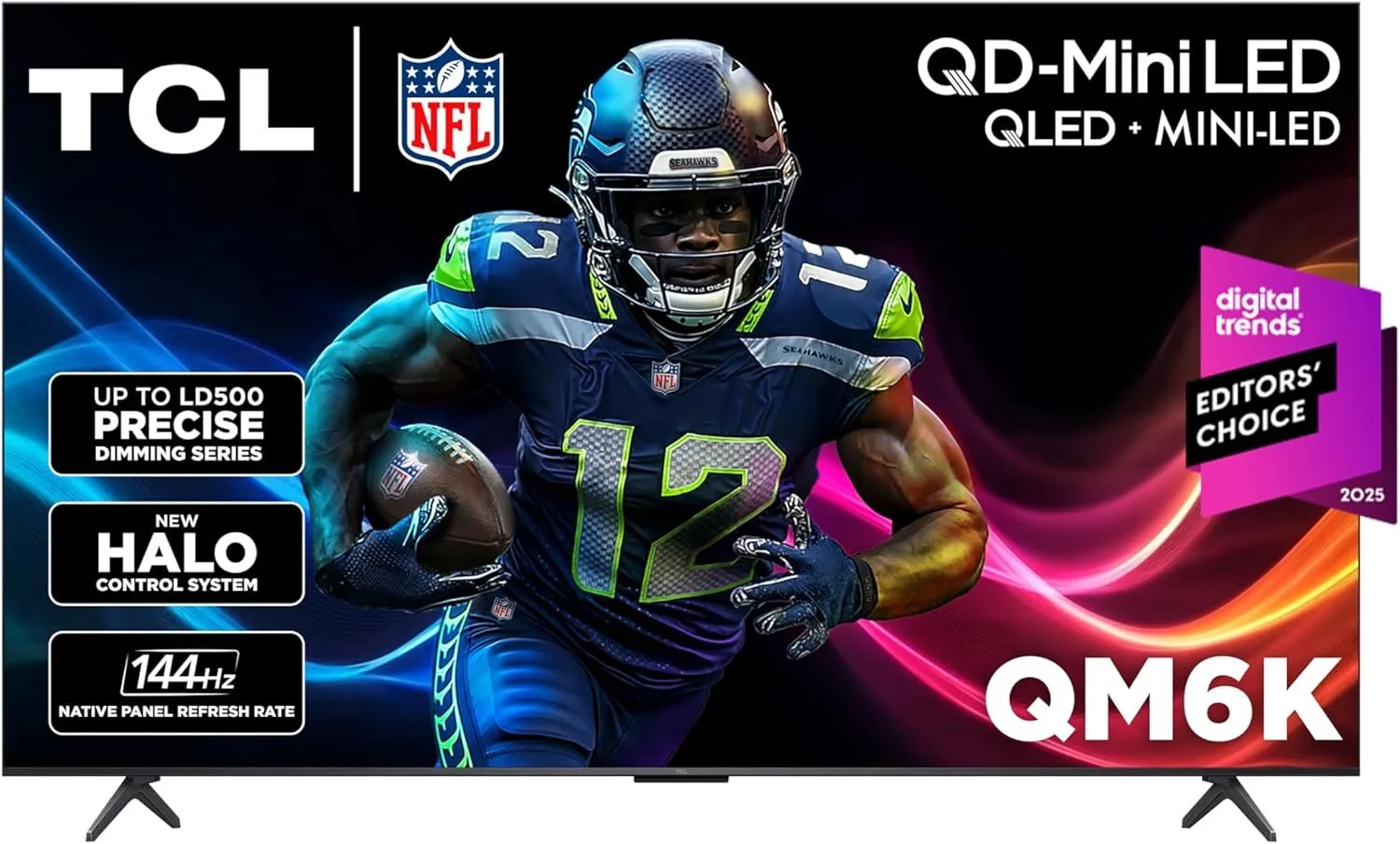
The 75" QM6K extends TCL's incredible Mini-LED value to the big screen. 144Hz gaming and solid HDR on a 75" for under $800 is a price point that didn't exist two years ago.
Under $800 for a 75" Mini-LED With 144Hz
That price point did not exist before TCL made it happen. At $500–$800, the 75" QM6K delivers Mini-LED backlighting with roughly 500 dimming zones, 144Hz gaming with dual HDMI 2.1 ports, and Dolby Vision HDR on Google TV. Samsung's 75" QN70F costs significantly more with no Dolby Vision. Amazon's 75" Omni Mini-LED costs nearly double with fewer zones.
The QM6K is the TV that converts skeptics. People who thought Mini-LED was a premium-only technology discover that TCL has made it accessible at big-screen sizes. The price alone makes the 75" QM6K one of the most important TVs of 2026.
500 Zones at 75 Inches: What to Expect
Scaling Mini-LED to 75 inches with a mid-tier zone count is a balanced act. Each zone covers more area, which means blooming halos are physically larger than on a 65-inch panel with the same zone count. Bright white credits scrolling over a black background show visible glow around the text. Starfields in space movies have soft halos around the brightest points.
In practice, the blooming rarely intrudes during regular viewing. Movies, shows, sports, and gaming all look controlled and impressive. The 1500-nit peak brightness gives HDR content genuine punch at 75 inches — sunlit landscapes glow, explosions flare, neon signs pop. At this screen size, the immersion factor compensates for the zone density limitations.
Use "Medium" local dimming for mixed-light rooms and "High" for dark-room viewing. The "High" setting increases zone contrast aggressiveness, which deepens blacks but can clip shadow detail. For movies at night, High mode with the lights off delivers the most cinematic experience.
Big-Screen Gaming: 144Hz at 75 Inches
Gaming on a 75-inch 144Hz Mini-LED is an experience that smaller screens cannot replicate. The field of view approaches what dedicated racing simulators use with triple monitors. Open-world games become panoramic. Competitive shooters fill enough of your vision that situational awareness improves through peripheral cues the screen provides.
Two HDMI 2.1 ports handle PS5 and Xbox Series X simultaneously. VRR eliminates tearing. Input lag in Game Mode stays responsive. The only limitation is that 75 inches at close range can cause eye fatigue during extended sessions — sit at least 8 feet back for comfortable long gaming sessions.
Strengths
- ✓75" Mini-LED with 144Hz under $800
- ✓Good brightness and zone count
- ✓Dolby Vision and HDR10+ on Google TV
Cons
- ✗Entry-level Mini-LED zones at 75"
- ✗Anti-glare coating is basic
- ✗Blooming more apparent at this screen size
QM6K vs. QM8K: When to Spend More
TCL's own 75" QM8K costs more than double the QM6K. What does the premium buy? The Halo Control system that actively reduces blooming, 165Hz instead of 144Hz, AIPQ PRO 2.0 processing, and approximately 2500 nits of peak brightness. For dedicated home theater enthusiasts and competitive gamers, the QM8K is a legitimate flagship. For everyone else, the QM6K delivers the core Mini-LED experience at a fraction of the investment.
Frequently Asked Questions
Is the TCL 75" QM6K worth the step up from the 75" T7?
It depends on the current price gap. The QM6K and T7 share similar zone counts and brightness at 75 inches. The QM6K has a slightly more established track record and more user reviews. If the price difference is small, either is excellent. If the T7 is significantly cheaper, it represents the better value.
Can I use the TCL 75" QM6K as a PC monitor?
At 75 inches, you need to sit at least 5-6 feet away for comfortable text reading and to avoid visible pixel structure. The 144Hz refresh rate and VRR make it technically capable as a PC gaming display. For productivity, a dedicated monitor is more practical — 75 inches is too large for desk distance.
How does the 75" QM6K compare to the 65" QM7K?
The 65" QM7K has roughly double the zone density per inch (1000 zones at 65" vs 500 zones at 75"), better processing with AIPQ PRO, and higher brightness. The 75" QM6K wins on screen size and total immersion. If you prioritize pure picture quality, the QM7K at 65 inches is superior. If screen size matters most, the 75" QM6K delivers more impact.
Does TCL offer a better 75" Mini-LED?
Yes. The TCL 75" QM8K is the flagship with Halo Control blooming reduction, 165Hz refresh rate, and around 2500 nits. It costs significantly more but represents the best 75-inch Mini-LED TCL makes. The QM6K at 75" is the value entry point; the QM8K is the performance flagship.
Final Verdict
Rating: 4.4/5
The 75" QM6K extends TCL's incredible Mini-LED value to the big screen. 144Hz gaming and solid HDR on a 75" for under $800 is a price point that didn't exist two years ago.
The 75" QM6K is the big-screen Mini-LED that everyone can afford. 144Hz, Dolby Vision, and solid backlight control at a price that resets expectations for what 75 inches should cost.
Track the TCL 75" QM6K
We check the price daily and monitor availability. You hear from us when something changes.
Only when something changes. Unsubscribe anytime.