Sony 75" BRAVIA 3 4K LED Smart Google TV Review 2026
Sony's X1 processor at 75 inches. The picture intelligence is real -- the spec sheet is not. A TV for people who watch, not for people who game.
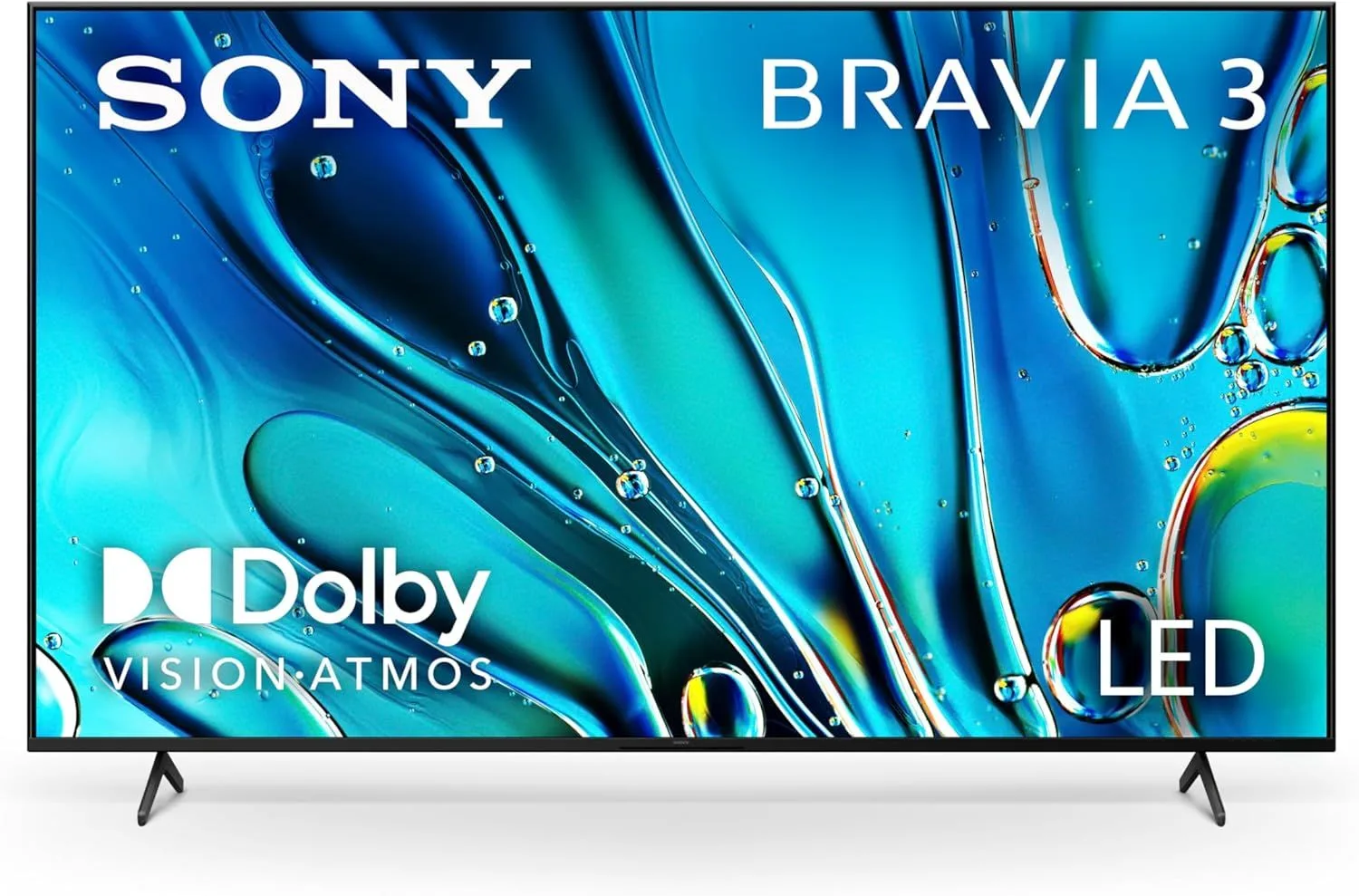
Sony's X1 processing at 75" makes this LED panel punch above its weight in color accuracy and motion handling. But at this price, the lack of 120Hz and HDMI 2.1 is hard to overlook for anyone who games.
What Sony Sells at 75 Inches
Sony does not sell specs. Never has. The BRAVIA 3 at 75 inches is an LED panel -- not QLED, not Mini-LED -- running at 60Hz with no HDMI 2.1. On paper, it loses to half-price alternatives from TCL. On a wall playing a Dolby Vision film, the picture tells a different story.
The X1 processor is the entire proposition. It analyzes every frame, adjusts color, contrast, and detail zone-by-zone, and applies motion handling that makes 24fps cinema look natural without the soap-opera effect that plagues cheaper processors. The result is a picture that looks "right" in a way that is difficult to quantify and impossible to ignore once you see it.
Sony bets that a 75-inch TV buyer who does not game will pay for processing intelligence. It is a narrow bet. And it might be the right one for you.
X1 Processing at Scale
At 55 inches, the X1 processor's advantages are subtle. At 75 inches, they become obvious. Upscaling 1080p streaming content -- still the majority of what most households watch -- is where Sony's processing advantage is clearest. YouTube videos, older Netflix shows, cable TV: the X1 adds detail and sharpness without creating the artificial over-processed look that Samsung and TCL processors sometimes introduce.
Color accuracy out of the box is reference-level. Most competing TVs ship with boosted saturation that looks vibrant in a showroom but fatigues your eyes after two hours. Sony calibrates conservatively. Skin tones look natural. Grass looks like grass, not neon. Sunsets have the gentle gradient they are supposed to have.
Motion handling at 24fps -- the frame rate of every major film -- is the best in this class. Sony's Motionflow XR eliminates judder without adding the smoothing artifacts that make movies look like daytime television. At 75 inches, where judder is more visible, this matters more than it does at smaller sizes.
Use it. Sony's implementation of Filmmaker Mode preserves the director's intended color temperature, contrast, and motion cadence. On the BRAVIA 3, it is the closest to reference you will get without a professional calibration. Enable it for movies and prestige TV, then switch to Vivid for sports if you want the extra punch.
Strengths
- ✓Sony X1 processor delivers the best upscaling at this tier
- ✓Reference-level out-of-box color accuracy
- ✓Google TV with BRAVIA features and Chromecast
Weaknesses
- ✗60Hz limits gaming
- ✗No HDMI 2.1 ports
- ✗Expensive for an LED panel when Mini-LED exists at this price
What the BRAVIA 3 Does Not Have
No 120Hz. No HDMI 2.1. No VRR. No ALLM. No local dimming. At $800–$1,200, the Sony 75" BRAVIA 3 is missing features that the TCL 75" T7 includes at significantly more expensive. That is a hard gap to justify with processing alone.
The 60Hz limitation is absolute for gamers. PS5 and Xbox Series X cap at 60fps on this TV. VRR cannot smooth frame drops. ALLM cannot auto-switch to game mode. If anyone in your household games on the living room TV, the BRAVIA 3 is the wrong choice. Full stop.
The lack of local dimming means dark scenes at 75 inches show a grayish backlight wash where black should be deep. For movie watchers -- Sony's target audience -- this is the most painful omission. Films live in shadows. This TV does not handle shadows well.
Google TV with BRAVIA Features
Google TV on the BRAVIA 3 is the same platform found on TCL, but Sony layers BRAVIA-specific features on top. The content recommendations are the same. The app selection is the same. What Sony adds: seamless Chromecast integration, BRAVIA CAM support for video calls, and Sony's own calibration tools.
Dolby Vision support gives Sony an edge over Samsung's HDR10+-only approach. Netflix, Disney+, Apple TV+, and HBO Max content gets scene-by-scene dynamic HDR optimization. On a 75-inch panel, the difference between Dolby Vision and standard HDR10 is visible -- richer highlights, more detail in dark areas, better color grading.
The Sony Tax at 75 Inches
At $800–$1,200, the BRAVIA 3 costs more than the Samsung 75" Q8F while missing local dimming and 120Hz. It costs more than the TCL 75" T7 while missing Mini-LED, 144Hz, and hundreds of dimming zones. Sony's X1 processing and Dolby Vision are the only features that the competition lacks.
For a dedicated movie watcher in a controlled lighting environment who does not game and who cares deeply about color accuracy and motion handling, the Sony premium buys something real. For everyone else, the TCL 75" T7 or Samsung 75" Q8F deliver more TV for less money.
Frequently Asked Questions
Is the Sony 75" BRAVIA 3 good for movies?
Excellent for movies. Sony X1 processing delivers reference-grade color accuracy and motion handling that most competitors cannot match at 75 inches. Dolby Vision support means Netflix, Disney+, and Apple TV+ content gets proper dynamic HDR treatment. The main limitation is no local dimming -- dark scenes lack the deep blacks of Mini-LED alternatives.
Why does the Sony 75" BRAVIA 3 still use 60Hz in 2026?
Sony targets movie watchers and casual viewers with the BRAVIA 3 line, not gamers. Film content runs at 24fps, streaming at 30fps or 60fps. A 60Hz panel handles all of these natively. The missing 120Hz only matters for gaming -- and Sony pushes gamers toward the BRAVIA 7 and 9 lines.
Can I game on the Sony 75" BRAVIA 3?
With real constraints. 60Hz caps frame rate. No HDMI 2.1 means no 4K 120Hz, no VRR, no ALLM. Casual single-player games at 30-60fps work fine. If gaming matters at all, the TCL 75" T7 or Samsung 75" Q8F are better choices at similar or lower prices.
How does Sony X1 processing compare to Samsung Quantum Processor at 75"?
Different strengths. Sony X1 prioritizes color accuracy, upscaling quality, and natural motion handling. Samsung Quantum Processor prioritizes AI scene optimization, gaming features, and HDR tone mapping. For movie purists, Sony wins. For feature-seekers and gamers, Samsung wins.
Is the Sony BRAVIA 3 overpriced at 75"?
On a spec sheet, yes. At this price, TCL offers 75" Mini-LED with 144Hz. Samsung offers 75" QLED with 120Hz and local dimming. Sony counters with X1 processing, Dolby Vision, and Google TV. If color accuracy is your top priority and you do not game, the premium can be justified. For most buyers, the competition offers more.
Final Verdict
Rating: 4.4/5
Sony's X1 processing at 75" makes this LED panel punch above its weight in color accuracy and motion handling. But at this price, the lack of 120Hz and HDMI 2.1 is hard to overlook for anyone who games.
Buy it if color accuracy and cinematic motion handling at 75 inches matter more to you than any spec-sheet feature. Skip it if you game, want local dimming, or if the processing premium does not resonate.
Track the Sony 75" BRAVIA 3
We check the price daily and monitor availability. You hear from us when something changes.
Only when something changes. Unsubscribe anytime.