Samsung 75" U8000F Review 2026
Samsung at 75 inches. The brand premium is real — and whether it's justified depends entirely on how much you value Tizen and SmartThings over raw picture specs.
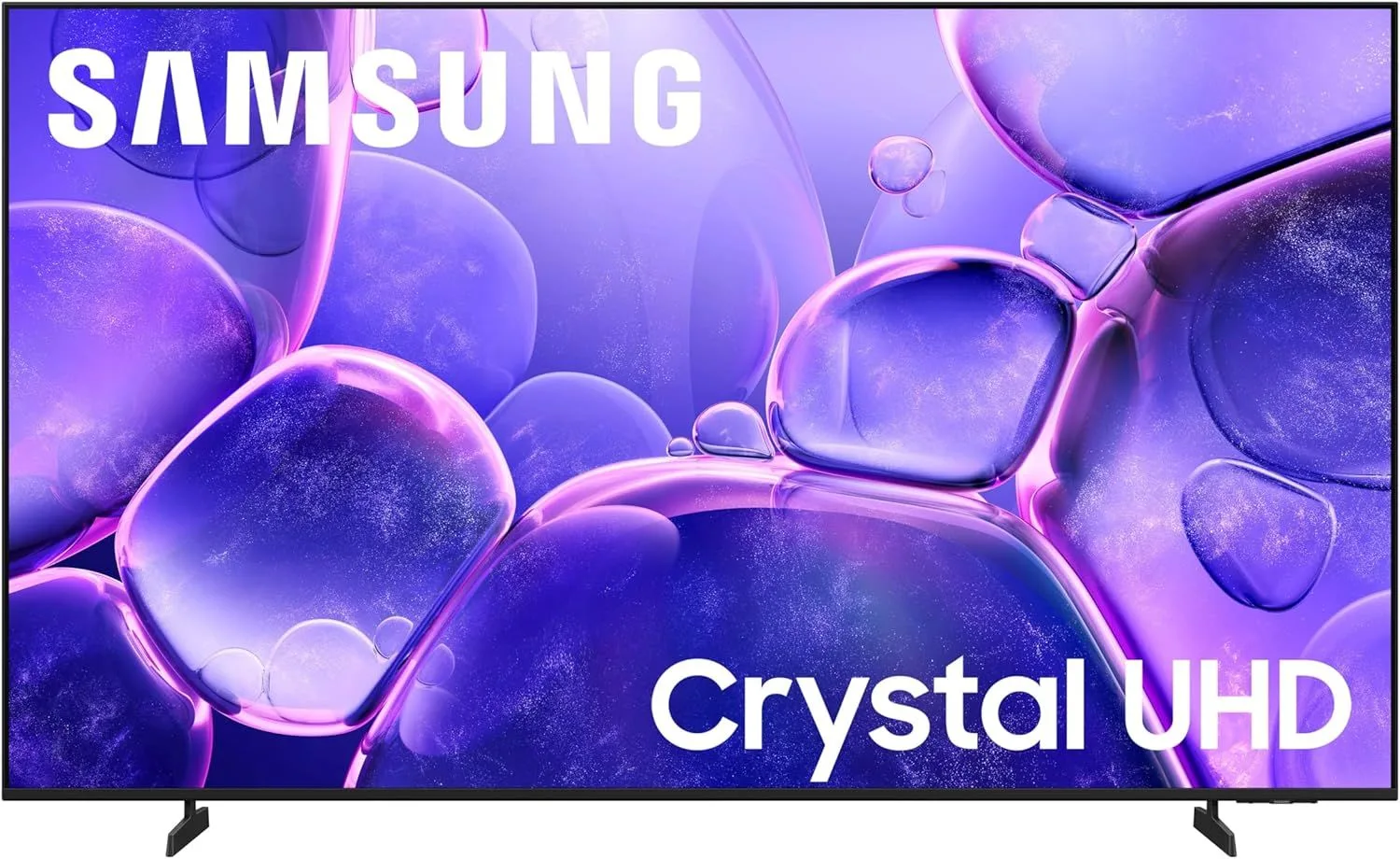
Samsung's 75" Crystal UHD charges a brand premium you won't find justified by specs alone. The Tizen platform and build quality are genuinely better, but the picture isn't worth the markup over Toshiba.
The Samsung Tax at 75"
Let's address it directly: the Samsung 75" U8000F costs more than a Toshiba 75" C350 that has Dolby Vision, and more than an Insignia 75" that delivers the same basic panel technology. The price difference buys you three things: Samsung's build quality, the Tizen smart platform, and SmartThings integration.
If those three things matter to you — and for Samsung ecosystem households, they might well — the U8000F is a solid choice. If you're brand-agnostic and care about picture specs per dollar? The Toshiba C350 is the better buy at 75".
Build Quality That Justifies Part of the Premium
Samsung's industrial design is a cut above at every price point, and the U8000F at 75" is no exception. Thinner bezels, a slimmer profile, and better materials give this TV a look that doesn't scream "budget" on your wall. The stand feels more stable than Insignia's or Toshiba's, and the remote has a premium heft that cheap competitors lack.
For a TV this large, build quality isn't just aesthetic — the sturdier stand and slimmer profile mean better wall-mount compatibility and more confidence that the TV will hold up over years of use.
Crystal Processor 4K
Samsung's Crystal Processor 4K delivers noticeably better upscaling than the basic processors in Insignia and (to a lesser degree) Toshiba. It handles 1080p streaming content well on the 75" panel, keeping edges relatively sharp and reducing artifacts. The color handling is also Samsung-calibrated — slightly cool by default, but natural after switching to Movie mode.
The HDR10+ Problem
Samsung chose HDR10+ over Dolby Vision. On a flagship Samsung TV with high brightness and local dimming, this is a reasonable trade-off — HDR10+ is technically capable of matching Dolby Vision. On a budget LED panel with limited brightness and no local dimming? Dolby Vision's scene-level optimization would help more than HDR10+'s metadata.
The bigger issue is content availability. Netflix, Disney+, and Apple TV+ all support Dolby Vision. HDR10+ support is more limited — primarily Amazon Prime Video and Samsung TV Plus. On a budget TV where HDR impact is already limited, having the wrong HDR format for most streaming content is a real disadvantage.
Tizen and SmartThings: The Real Value Proposition
If you're deep in Samsung's ecosystem, Tizen and SmartThings are genuinely useful. Control your Samsung phone, tablet, Galaxy Watch, and smart home devices from the TV. Samsung's Gaming Hub provides cloud gaming without a console. The interface is clean, responsive, and — unlike Fire TV — not drowning in advertisements.
Tizen's app selection is comprehensive, and the platform feels more polished than Fire TV or basic Google TV implementations at this price. Samsung's voice assistant handles smart home control well, though it's less capable than Alexa for general queries.
Where Samsung Delivers
- ✓ Samsung design and build quality at 75"
- ✓ Crystal Processor 4K handles upscaling well
- ✓ SmartThings integration for smart home control
Cons
- ✗ No Dolby Vision support
- ✗ Significantly more expensive than comparable TCL or Hisense 75" models
- ✗ No local dimming — contrast suffers in dark scenes
Value Assessment
The Samsung 75" U8000F is above average for its category — more expensive than the Toshiba C350 and Insignia alternatives without noticeably better picture quality. The premium buys ecosystem benefits, build quality, and Tizen polish.
Buy it if: You're a Samsung household with SmartThings devices, and you value the Tizen platform and build quality over Dolby Vision.
Skip it if: You want the best picture quality per dollar at 75". The Toshiba C350 with Dolby Vision is the smarter purchase for movie watchers.
The Verdict
Samsung's 75" Crystal UHD charges a brand premium you won't find justified by specs alone. The Tizen platform and build quality are genuinely better, but the picture isn't worth the markup over Toshiba.
Rating: 4.2/5 based on 645 reviews
See all Budget LED TV reviews →
Frequently Asked Questions
Is the Samsung 75" U8000F worth the price premium over Toshiba and Insignia?
For specs alone? No. The Toshiba 75" C350 offers Dolby Vision for less money, and the Insignia is significantly cheaper for the same basic panel quality. The Samsung premium buys you better build quality, the Tizen platform, and SmartThings integration — you have to decide if those matter enough to pay more.
Why doesn't the Samsung 75" U8000F support Dolby Vision?
Samsung uses its own HDR10+ standard instead of licensing Dolby Vision. HDR10+ is a fine format, but far less content is available in HDR10+ compared to Dolby Vision. Most major streaming services support Dolby Vision; HDR10+ support is spottier.
Is the Crystal Processor 4K any good?
For upscaling, yes — it handles 720p and 1080p content better than basic budget processors. For HDR processing, it's limited by the panel's low brightness. The processor can't make up for hardware limitations, but it does make the most of what the panel can deliver.
Can I use the Samsung 75" U8000F as a SmartThings hub?
Yes. The TV integrates with Samsung SmartThings to control compatible lights, locks, cameras, and other smart home devices. If you're already in the Samsung ecosystem, this is a useful feature that competitors don't offer.
How are the speakers on the Samsung 75" U8000F?
The 20W speakers are the best in the budget 75" class. Samsung's Object Tracking Sound Lite provides decent spatial separation, and dialogue clarity is above average. Still not a replacement for a soundbar in a large room, but noticeably better than the 10-12W speakers on Insignia and Toshiba.
Track the Samsung 75" U8000F
We check the price daily and monitor availability. You hear from us when something changes.
Only when something changes. Unsubscribe anytime.