Samsung 65" QN70F Neo QLED Mini-LED Smart TV (2025) Review 2026
Samsung's entry Neo QLED wins on anti-reflection and wide viewing angles. If your living room is sun-drenched or your couch seats six people wide, this is the Mini-LED to buy. For everything else, competitors offer more.
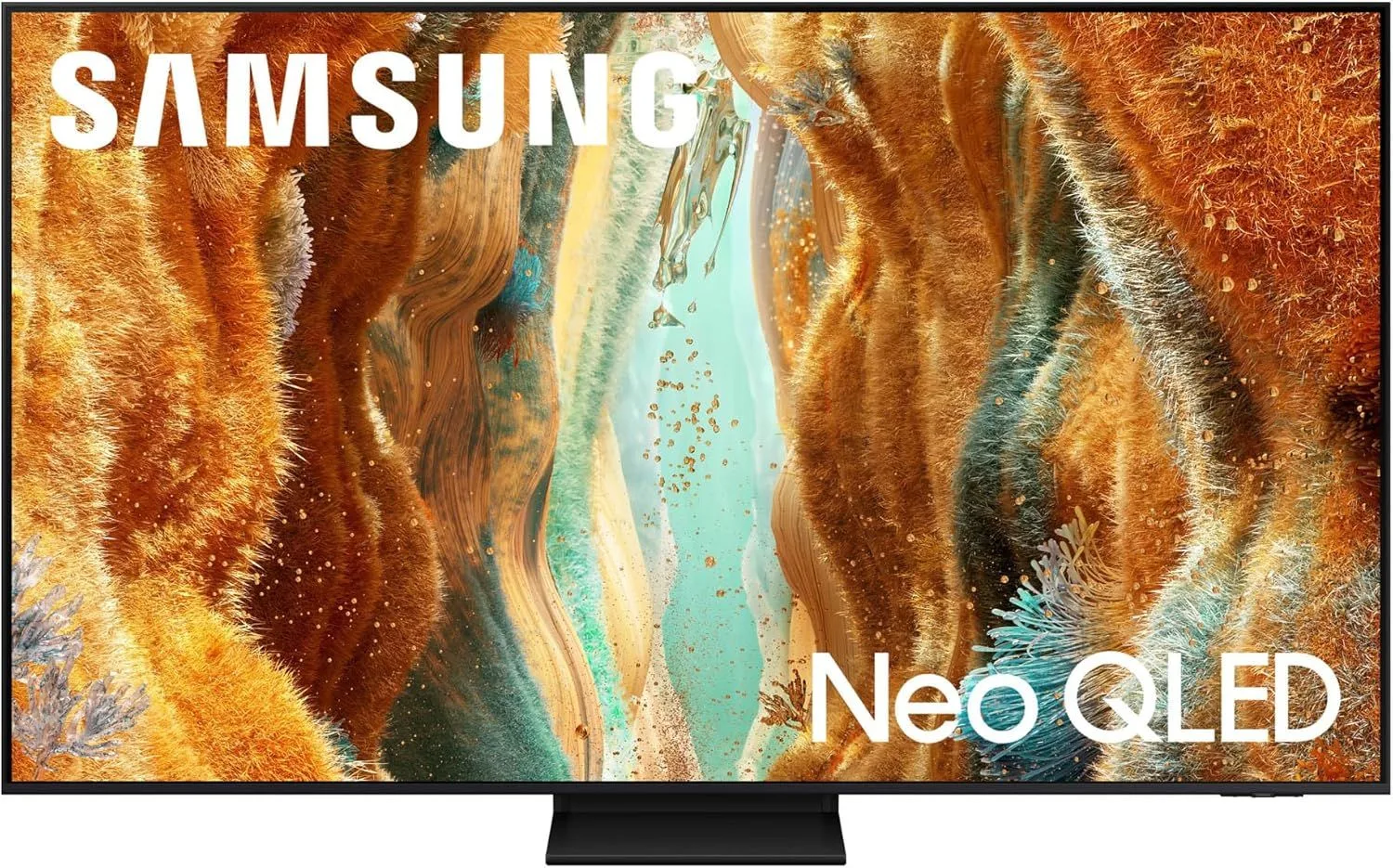
Samsung's QN70F at 65" wins on anti-reflection and viewing angles — genuinely the best bright-room Mini-LED. But if your room is dark, TCL and Hisense offer more zones for less money.
Built for Bright Rooms
Every TV looks good in a dark showroom. The QN70F is designed for where you actually live — a living room with windows, overhead lights, and a lamp behind the couch. Samsung's anti-reflection coating is genuinely the best in the LCD television industry. Where TCL and Hisense screens show visible reflections of windows and light fixtures, the QN70F absorbs and diffuses ambient light.
This is not a marginal improvement. In a room with a large west-facing window during afternoon sun, the difference between the QN70F and a comparably-priced TCL is immediately visible. Samsung's screen stays readable. The TCL shows a ghosted reflection of the window. For buyers in bright spaces, this single feature justifies the Samsung premium.
The Family Room Advantage
Samsung's wide-angle technology reduces the color and brightness drop-off that plagues VA panels at side angles. Most Mini-LEDs look great from the center but wash out from side seats. The QN70F maintains more consistent color and contrast across a wider viewing arc — not as wide as an OLED, but noticeably better than the competition.
In a family room where five or six people watch from different positions, this matters. The person on the far end of the sectional couch sees a picture that is closer to what the center viewer sees. This is a tangible quality-of-life improvement for larger households.
Samsung's wide-angle tech is most effective in the "Standard" picture mode. Switching to "Movie" mode slightly narrows the effective viewing cone as the dimming algorithm becomes more aggressive. For family movie nights with a wide audience, Standard mode is the better choice.
Fewer Zones, No Dolby Vision
The QN70F's Quantum Matrix backlighting does not disclose an exact zone count, but independent measurement puts it below the Hisense U75QG and TCL QM7K at this size. In a dark room with demanding content, the competitors deliver deeper blacks and more precise zone transitions. The QN70F is competitive — not class-leading — on pure contrast performance.
The Dolby Vision absence remains Samsung's most frustrating limitation. Most premium content on Netflix, Disney+, and Apple TV+ is mastered in Dolby Vision. Without it, the QN70F falls back to HDR10, which offers less precise tone mapping. HDR10+ Adaptive provides some compensation, but Dolby Vision content looks measurably better on TCL and Hisense panels that support it.
Strengths
- ✓Best-in-class anti-reflection coating in bright rooms
- ✓Wide viewing angle technology
- ✓Samsung Gaming Hub and 4K 120Hz
Cons
- ✗No Dolby Vision support
- ✗Fewer dimming zones than TCL and Hisense at similar prices
- ✗NQ4 processor is not Samsung's top-tier chip
Samsung Gaming Hub and Tizen
Two HDMI 2.1 ports at 4K 120Hz with VRR. Samsung Gaming Hub aggregates Xbox Cloud Gaming, GeForce NOW, and Amazon Luna in a single interface — useful for cloud gaming without a console. The Tizen platform is responsive, the SmartThings integration is deep, and the Solar Cell remote remains a clever convenience.
The 120Hz panel is smooth for gaming. TCL offers 144Hz for less money, but the practical difference between 120Hz and 144Hz on a TV-distance screen is negligible for most players.
The Premium Equation
At $800–$1,200, the QN70F costs more than the TCL QM7K and Hisense U75QG while offering fewer dimming zones and no Dolby Vision. Samsung's advantages are anti-reflection, wide viewing angles, build quality, and ecosystem polish. These are real but intangible — they do not show up in spec comparisons.
Buy the QN70F if your room is bright, your family is large, and you value Samsung's design and ecosystem. Buy the TCL or Hisense if you want the most picture quality per dollar in a controlled viewing environment.
Frequently Asked Questions
Why does Samsung not support Dolby Vision?
Samsung uses its own HDR10+ Adaptive format across its entire TV lineup. This is a strategic decision — Samsung does not want to pay Dolby licensing fees and prefers to control its own HDR ecosystem. The practical impact: Netflix, Disney+, and Apple TV+ Dolby Vision content falls back to HDR10 on Samsung TVs.
How effective is the anti-reflection coating?
It is the best in the industry for LCD TVs. In a room with large windows, overhead lighting, or a light source behind the viewer, the QN70F shows dramatically fewer reflections than TCL, Hisense, or LG alternatives. The screen stays readable even with bright ambient light. This alone can justify the Samsung premium for sunlit living rooms.
Is the QN70F the same as the QN90F from previous years?
No. The QN70F is Samsung's entry-level Neo QLED for 2025. It uses the NQ4 processor, not the flagship NQ8. The QN90F (now discontinued) was a higher tier. The QN70F has fewer dimming zones and less processing power than the former flagship — it is more comparable to what used to be Samsung's QN85.
Can you wall mount the QN70F flush?
The AirSlim design is thinner than most Mini-LEDs, making it suitable for wall mounting. Samsung sells a Slim Fit Wall Mount accessory that brings the TV close to the wall with a cleaner cable management system than standard VESA mounts.
Is the Samsung QN70F good for gaming?
Yes. Two HDMI 2.1 ports support 4K 120Hz with VRR and ALLM. Samsung Gaming Hub provides cloud gaming access. Input lag in Game Mode is competitive. The 120Hz panel is smooth — though note that TCL offers 144Hz at lower prices.
Final Verdict
Rating: 4.4/5
Samsung's QN70F at 65" wins on anti-reflection and viewing angles — genuinely the best bright-room Mini-LED. But if your room is dark, TCL and Hisense offer more zones for less money.
The best bright-room Mini-LED at 65". Anti-reflection and wide angles are genuine advantages that no competitor matches. The spec sheet alone does not tell the QN70F's story — the room it is in tells the story.
Compare This TV
See how it stacks up in a detailed head-to-head.
Track the Samsung 65" QN70F
We check the price daily and monitor availability. You hear from us when something changes.
Only when something changes. Unsubscribe anytime.