Samsung 55" Q8F QLED AirSlim Smart TV (2025) Review 2026
Samsung's step-up QLED adds local dimming and dual HDMI 2.1 — meaningful upgrades that push into Mini-LED pricing territory. That is both its strength and its problem.
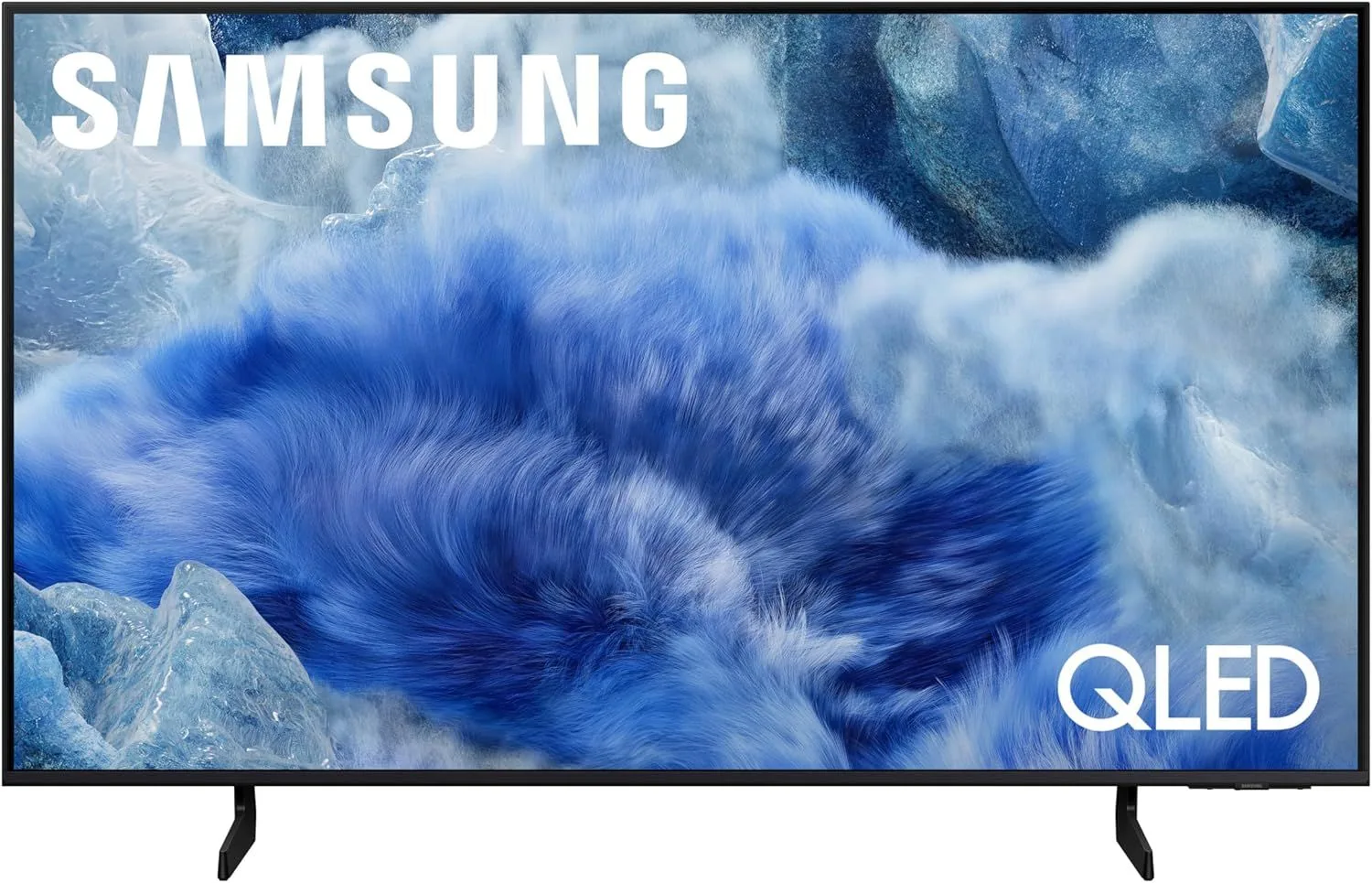
The Q8F adds local dimming and a second HDMI 2.1 over the Q7F — meaningful upgrades for gamers and movie watchers. But the price creeps into Mini-LED territory where competitors offer more.
Sandwiched Between QLED and Mini-LED
The Q8F sits in an uncomfortable position. At mid-range for its category pricing, it costs noticeably more than Samsung's Q7F below it, and uncomfortably close to Mini-LED options that offer more zones, better contrast, and higher brightness.
Hisense's entry Mini-LED, the QD7QF, costs significantly more expensive and includes Mini-LED backlighting with roughly 150 zones. The Q8F's full-array local dimming uses fewer, larger zones. On paper, the math does not favor Samsung.
But TVs are not spreadsheets. And the Q8F has real advantages that specs do not capture.
Local Dimming: The Contrast Upgrade
The jump from the Q7F (edge-lit, no dimming) to the Q8F (full-array local dimming) is visible from across the room. Dark scenes in movies that looked washed-out on the Q7F have genuine depth on the Q8F. The black bars in widescreen content are darker. Night scenes in prestige TV shows retain detail instead of drowning in gray.
Samsung's dimming zone count is modest — fewer zones than TCL or Hisense at similar prices. This means blooming (light halo around bright objects on dark backgrounds) is more visible than on competitors with more zones. But any local dimming is better than no local dimming, and the Q8F crosses that threshold convincingly.
The Q8F has two HDMI 2.1 ports supporting 4K 120Hz each. Connect your PS5 to port 3 and Xbox to port 4. Both run at full capability simultaneously, with VRR and ALLM enabled per-port. Samsung Gaming Hub adds Xbox Cloud Gaming and GeForce Now on top for cloud-based options.
Object Tracking Sound+: Built-In Audio That Works
The Q8F doubles the speaker power from 20W (Q7F) to 40W and adds Object Tracking Sound+. Sound appears to follow on-screen movement — dialogue shifts from left to right as characters walk across the screen. For a built-in speaker system, this is impressive.
With Dolby Atmos support, the Q8F creates a wider sound field than most TVs in this range. It will not replace a proper soundbar for bass-heavy content, but for daily TV watching and casual movie nights, the Q8F is one of the few TVs where the built-in speakers are adequate. That saves you money and shelf space.
Strengths
- ✓Full-array local dimming adds real contrast improvement
- ✓Two HDMI 2.1 ports for dual console gaming
- ✓Object Tracking Sound+ for spatial audio
Cons
- ✗No Dolby Vision — HDR10+ only
- ✗Approaches Mini-LED pricing without Mini-LED performance
- ✗Samsung's dimming zone count is modest for the price
The Dolby Vision Gap
Samsung's refusal to support Dolby Vision is a legitimate criticism at this price. Netflix, Disney+, Apple TV+, and Vudu all use Dolby Vision as their premium HDR format. On the Q8F, that content falls back to HDR10, which lacks the dynamic metadata that adjusts tone mapping scene-by-scene.
For Samsung, HDR10+ serves the same purpose — and Amazon Prime, Samsung TV Plus, and some Warner Bros content support it. But the Dolby Vision library is larger, and at $500–$800, most competitors support both formats.
Worth the Step Up from Q7F?
If you game with two consoles or watch a lot of dark content (thrillers, horror, prestige dramas), the Q8F's local dimming and dual HDMI 2.1 justify the premium over the Q7F. The 40W speakers are a genuine bonus.
If you primarily stream bright content (sitcoms, animation, sports), the Q7F delivers 90% of the experience for noticeably less. And if raw picture quality per dollar is the goal, Mini-LED alternatives from TCL and Hisense offer more backlighting performance at the same price.
Frequently Asked Questions
What is the difference between the Samsung Q7F and Q8F?
The Q8F adds full-array local dimming, a second HDMI 2.1 port, and Object Tracking Sound+ (40W vs 20W speakers). The local dimming is the biggest upgrade — it noticeably improves contrast in dark scenes. The extra HDMI 2.1 port matters for dual-console gaming setups.
Is the Samsung Q8F better than entry Mini-LED TVs?
It depends on what you prioritize. Entry Mini-LEDs like the Hisense QD7QF cost less and have more backlighting zones. But the Samsung Q8F has better build quality, superior anti-reflection coating, and the Samsung ecosystem. For bright rooms, Samsung often wins despite fewer zones.
Does the Q8F support Dolby Vision?
No. Like all Samsung TVs, the Q8F uses HDR10+ instead of Dolby Vision. If you primarily watch Netflix, Disney+, or Apple TV+ content that favors Dolby Vision, you will get HDR10 fallback instead. Amazon Prime and Samsung TV Plus use HDR10+ natively.
How good are the Q8F speakers compared to Q7F?
Noticeably better. The Q8F doubles the speaker power to 40W and adds Object Tracking Sound+, which creates a wider sound field that follows on-screen action. It is one of the few TVs where the built-in speakers are adequate enough to delay buying a soundbar.
Is the Q8F a good choice for gaming?
Yes. Two HDMI 2.1 ports support 4K 120Hz with VRR and ALLM. Samsung Gaming Hub adds cloud gaming access. The local dimming improves dark scene contrast during gaming — important for atmospheric titles. Input lag is competitive at around 10ms in Game Mode.
Final Verdict
Rating: 4.4/5
The Q8F adds local dimming and a second HDMI 2.1 over the Q7F — meaningful upgrades for gamers and movie watchers. But the price creeps into Mini-LED territory where competitors offer more.
Buy it for local dimming, dual gaming ports, and built-in speakers that actually work. Skip it if you can stretch to Mini-LED or if the Dolby Vision omission is a dealbreaker.
Track the Samsung 55" Q8F QLED
We check the price daily and monitor availability. You hear from us when something changes.
Only when something changes. Unsubscribe anytime.