Hisense 55" QD7QF Mini-LED QLED Smart TV Review 2026
Mini-LED at $300–$500 pricing. Hisense compresses backlight zone technology into budget territory. The compromises are real -- but so is the contrast improvement over standard LED.
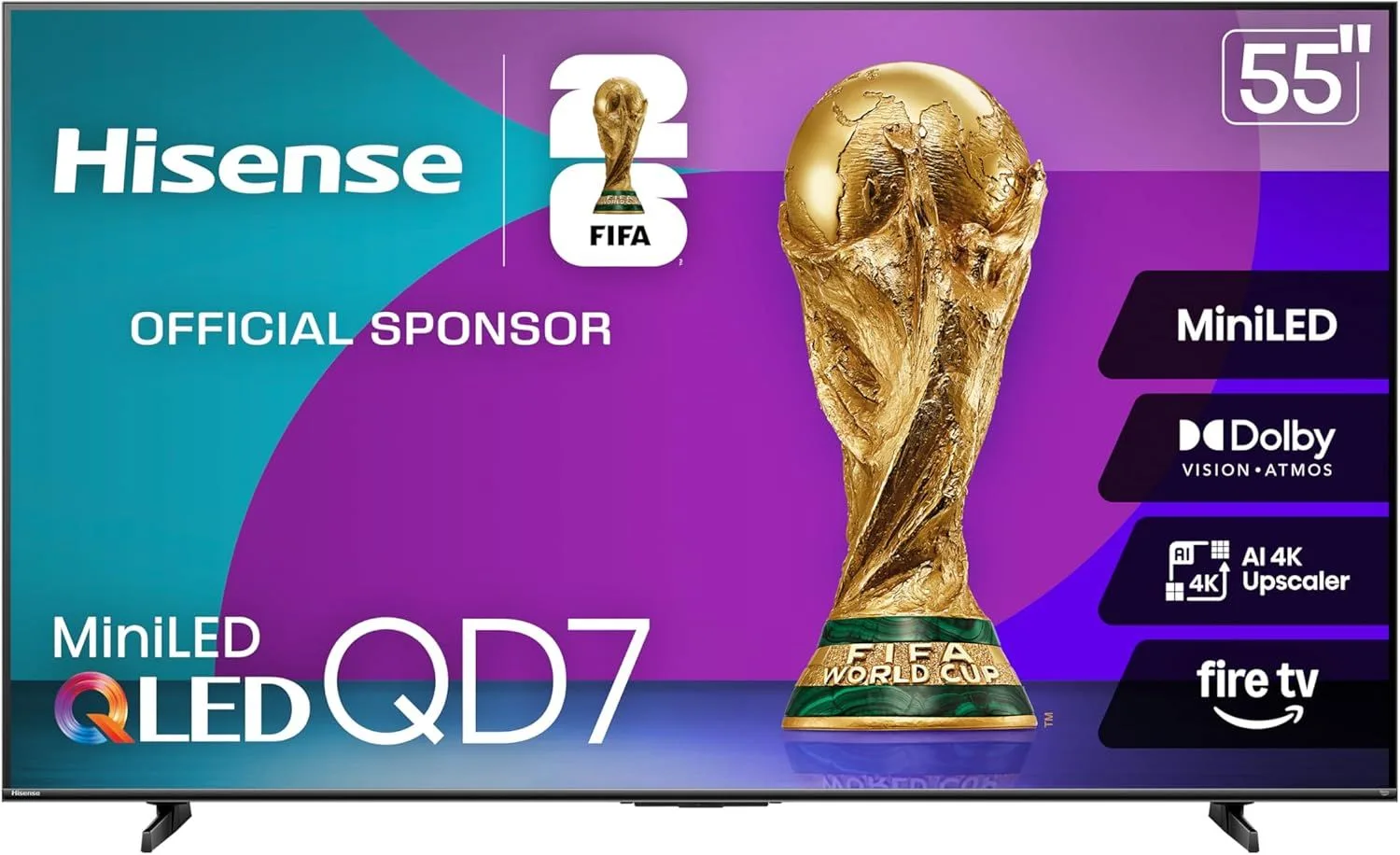
Hisense compresses Mini-LED technology into an entry-level price. The backlight zone count won't match premium models, but you still get noticeably better contrast than standard LED.
Mini-LED Comes to the Budget Shelf
A year ago, Mini-LED started at mid-range pricing. Hisense changed that. The QD7QF puts Mini-LED backlighting and quantum dot color into a 55-inch TV priced closer to basic QLEDs than premium Mini-LEDs. Something had to give -- and what gives is zone count, refresh rate, and connectivity.
Approximately 150 dimming zones is a fraction of what TCL and Samsung pack into their mid-range Mini-LEDs. But 150 zones versus zero zones is the relevant comparison for buyers at this price. Dark scenes gain depth. Bright highlights pop against darker surroundings. Not subtle.
What 150 Zones Looks Like in Practice
Each zone on a 150-zone panel covers a larger area than on 500+ zone models. Bright objects on dark backgrounds show halos of light bleed -- subtitles on letterboxed black bars, stars in a night sky. This blooming is the visible signature of entry Mini-LED.
For bright content -- animated films, nature docs, daytime television -- the zone limitations barely register. The quantum dot layer produces rich, saturated color regardless. Dark, high-contrast content is where entry-level zone counts show their limits.
Feed the QD7QF bright, colorful material. Planet Earth. Pixar films. Sports in daylight. The quantum dot color and Mini-LED brightness produce vivid, engaging images. Save moody prestige dramas for a TV with more dimming zones -- or watch with the lights on.
Strengths
- ✓Mini-LED backlight at near-budget pricing
- ✓Quantum dot color enhancement
- ✓Google TV with Chromecast built-in
Cons
- ✗Entry-level Mini-LED with limited zone count
- ✗60Hz limits gaming capability
- ✗Only 3 HDMI ports with no HDMI 2.1
Spend More or Save Here?
The TCL 55" QM6K costs modestly more expensive and adds 144Hz, HDMI 2.1, and roughly triple the dimming zones. If your budget can stretch, the QM6K is better by every measurable metric. The QD7QF exists for buyers whose budget cannot stretch -- and for them, it delivers Mini-LED contrast at a price point that did not exist before Hisense made it happen.
Frequently Asked Questions
Is the Hisense QD7QF really Mini-LED at this price?
Yes. It uses a Mini-LED backlight array with quantum dot color. The zone count (~150) is lower than mid-range Mini-LEDs, but the technology is real. You get noticeably better contrast than standard LED panels.
How does the QD7QF compare to the TCL QM6K at 55"?
The TCL QM6K costs more but adds 144Hz, HDMI 2.1, and roughly triple the dimming zones. If you game at all, the QM6K is the better buy. If you only stream, the QD7QF saves money while still delivering Mini-LED contrast.
Can I game on the Hisense 55" QD7QF?
Casual games only. The 60Hz panel and lack of HDMI 2.1 mean no 4K/120fps, no VRR, and no ALLM. PS5 and Xbox Series X will be limited to 4K/60fps.
Is Google TV good on the QD7QF?
Google TV is a strong platform with the widest app library, Chromecast built-in, and capable voice search. It pushes content recommendations on the home screen, but the ecosystem is comprehensive.
Final Verdict
Rating: 4.2/5
Hisense compresses Mini-LED technology into an entry-level price. The backlight zone count won't match premium models, but you still get noticeably better contrast than standard LED.
Buy it for Mini-LED contrast at the lowest price available. Skip it if you game or want more zones -- the TCL QM6K is the better investment.
Track the Hisense 55" QD7QF
We check the price daily and monitor availability. You hear from us when something changes.
Only when something changes. Unsubscribe anytime.