Amazon Fire TV 55" Omni QLED Series (2025) Review 2026
Amazon's flagship Fire TV gets QLED color, 120Hz gaming, and the deepest Alexa integration on any television. The price of admission: living inside Amazon's ecosystem.
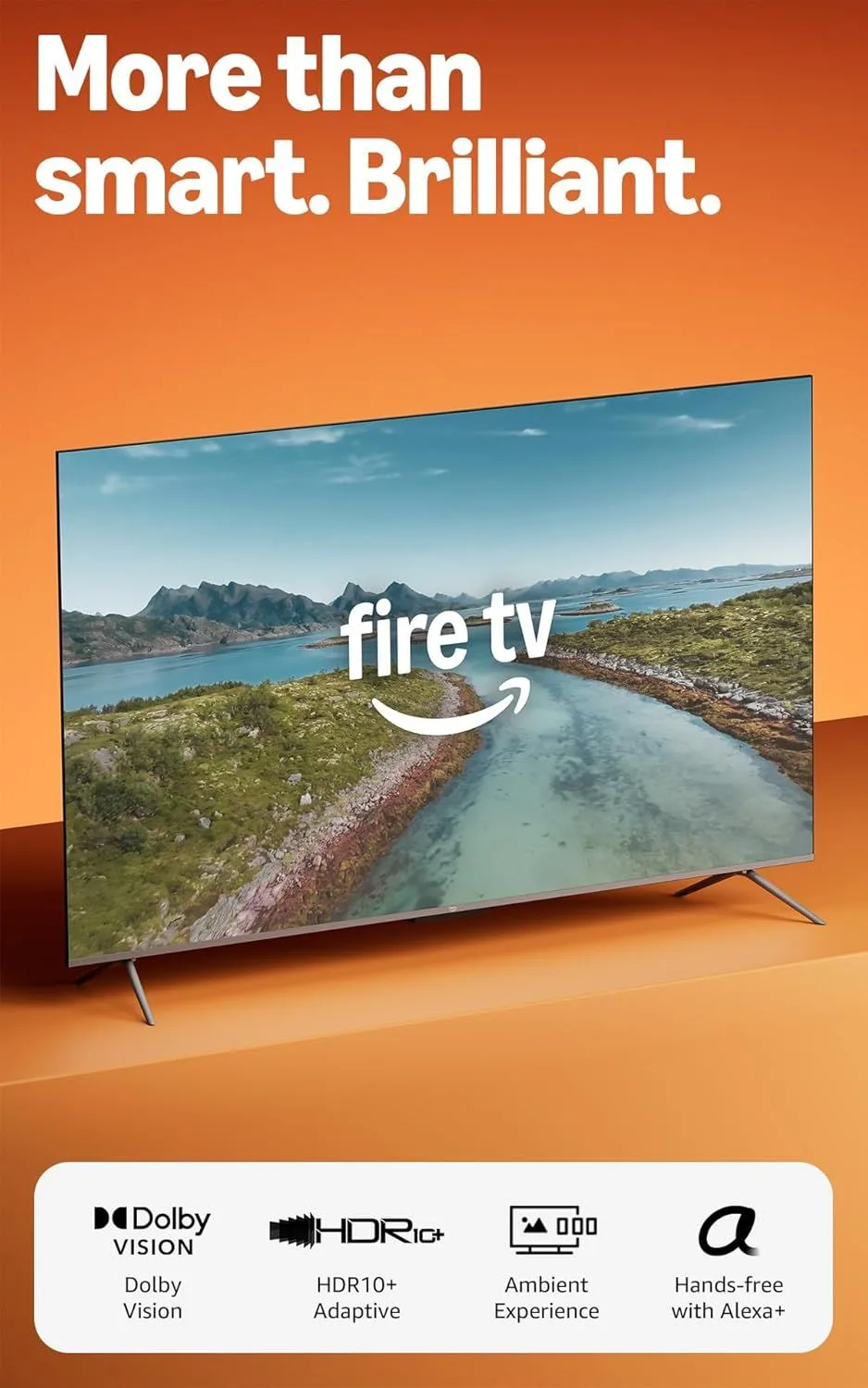
The definitive Fire TV experience. Amazon's 2025 Omni QLED combines QLED color, 120Hz gaming, and the deepest Alexa integration available. The trade-off is living inside Amazon's ecosystem.
An Amazon Product First, a TV Second
Most TVs are displays that happen to run a smart platform. The Omni QLED 2025 is the opposite — it is an Amazon smart home device that happens to be a television. Understanding this distinction is essential before buying.
Every feature orbits the Alexa ecosystem. Ambient Experience 2.0 displays smart home widgets, security camera feeds, and contextual information when the TV is idle. Alexa voice control is not just for searching content — it manages your entire connected home. You can start a routine, adjust thermostat settings, check who is at the front door, and play music across Echo devices, all from the TV.
This level of integration is unique. No other TV manufacturer comes close to matching it. But it requires committing to Amazon's ecosystem — and tolerating the advertising that funds it.
120Hz Gaming: The Big Upgrade
The 2025 model's most significant improvement is the 120Hz panel with dual HDMI 2.1 ports. PS5 and Xbox Series X both connect at 4K 120fps with VRR and ALLM — a capability the 2023 Omni completely lacked.
Two HDMI 2.1 ports means both current-gen consoles can run simultaneously at full capability. This is a genuine advantage over Samsung's Q7F, which limits you to one 2.1 port. Input lag is competitive with dedicated gaming TVs, and Amazon's Game Mode auto-activates when a console signal is detected.
HDMI ports 3 and 4 are the 2.1 ports. Connect your PS5 and Xbox there for full 4K 120Hz capability on both. The TV auto-switches Game Mode per port, so your gaming settings do not affect your streaming ports.
QLED Performance: Middle of the Pack
The QLED color enhancement is solid — quantum dots widen the color gamut and improve saturation in HDR content. Both Dolby Vision and HDR10+ are supported, a dual-format approach that ensures you get the best HDR regardless of streaming service.
Where the Omni QLED falls short of its ambitions is brightness. Mid-range peak brightness means HDR highlights do not have the same punch as Samsung's Q8F or any Mini-LED at this price. In a bright living room, the picture washes out faster than competitors. In a dim room, the QLED color and decent contrast ratio produce a satisfying image.
Strengths
- ✓120Hz panel with HDMI 2.1 for gaming and VRR
- ✓Most advanced Alexa smart home integration
- ✓Ambient Experience 2.0 with art mode
Cons
- ✗Fire TV ads remain aggressive throughout the interface
- ✗Mid-range brightness falls short of Samsung and TCL QLEDs
- ✗Amazon ecosystem lock-in may frustrate switching later
The Advertising Reality
At mid-range for its category pricing, you might expect a clean, premium interface. You do not get one. Fire TV's home screen features sponsored rows, recommended content that is functionally advertising, and banner promotions. This is true on the cheapest Fire TV Stick and on this near-premium QLED. Amazon treats every screen as potential ad inventory.
You can reduce the noise by disabling some notifications and customizing the home screen layout. But you cannot eliminate it. If this is a dealbreaker, the Roku Pro Series offers a far cleaner experience at a similar price point with comparable features.
Ecosystem Premium vs. Picture Quality
At $500–$800, you are spending more for ecosystem integration than for picture performance. The Samsung Q8F costs slightly more but adds local dimming. The Hisense QD7QF costs significantly less and delivers entry Mini-LED. On raw picture quality per dollar, the Omni QLED does not compete.
What it offers instead is the most integrated smart home TV experience available. If your household runs on Alexa and you want a TV that is truly part of your home automation — not just an afterthought — this is the only real option.
Frequently Asked Questions
Is the 2025 Omni QLED worth the upgrade over the 2023?
If you game, absolutely. The 120Hz panel and HDMI 2.1 are real upgrades. If you only stream, the 2023 at clearance pricing delivers a similar experience for less. Ambient Experience 2.0 adds new widget layouts and improved art curation, but those alone do not justify the price gap.
How deep is the Alexa integration?
Deeper than any other TV. You can control smart home devices, make video calls on Echo Show devices, view security cameras, set routines that trigger when you turn on the TV, and use the Ambient Experience as a full smart home dashboard. It is the most complete Alexa experience available on a TV.
Can I use the Omni QLED 2025 without an Amazon account?
Technically yes, but you lose most of the smart features. Fire TV is deeply integrated with Amazon services. Without an account, you cannot access the Alexa ecosystem, Ambient Experience, or many built-in apps. At that point, you would be better off with a Google TV or Roku.
Does the 2025 Omni QLED support Dolby Vision and HDR10+?
Yes, both. This is one of the few TVs that supports both HDR formats, so you get the best HDR version regardless of which streaming service you use. Netflix delivers Dolby Vision while Amazon Prime favors HDR10+ — this TV handles both natively.
How loud are the built-in speakers?
The 20W speakers fill a small to medium room adequately. They lack bass depth for movies and music, but dialogue clarity is good. For anything beyond casual listening, a soundbar improves the experience noticeably. The TV supports eARC for quality audio passthrough.
Final Verdict
Rating: 4.3/5
The definitive Fire TV experience. Amazon's 2025 Omni QLED combines QLED color, 120Hz gaming, and the deepest Alexa integration available. The trade-off is living inside Amazon's ecosystem.
Buy it if Alexa is the center of your smart home and you want the TV to be part of that ecosystem. Skip it if you prioritize picture quality per dollar — competitors deliver more screen performance for less money.
Track the Amazon 55" Omni QLED 2025
We check the price daily and monitor availability. You hear from us when something changes.
Only when something changes. Unsubscribe anytime.