Insignia 65" Fire TV vs Toshiba 65" C350: Which Is Better in 2026?
Two of the cheapest 65" 4K TVs from recognized brands, and they share more than they don't. Both run Fire TV. Both are 60Hz LED panels. Both target buyers where price is the primary filter. The Insignia is similarly priced than the Toshiba. The gap between them is narrow, but it matters.
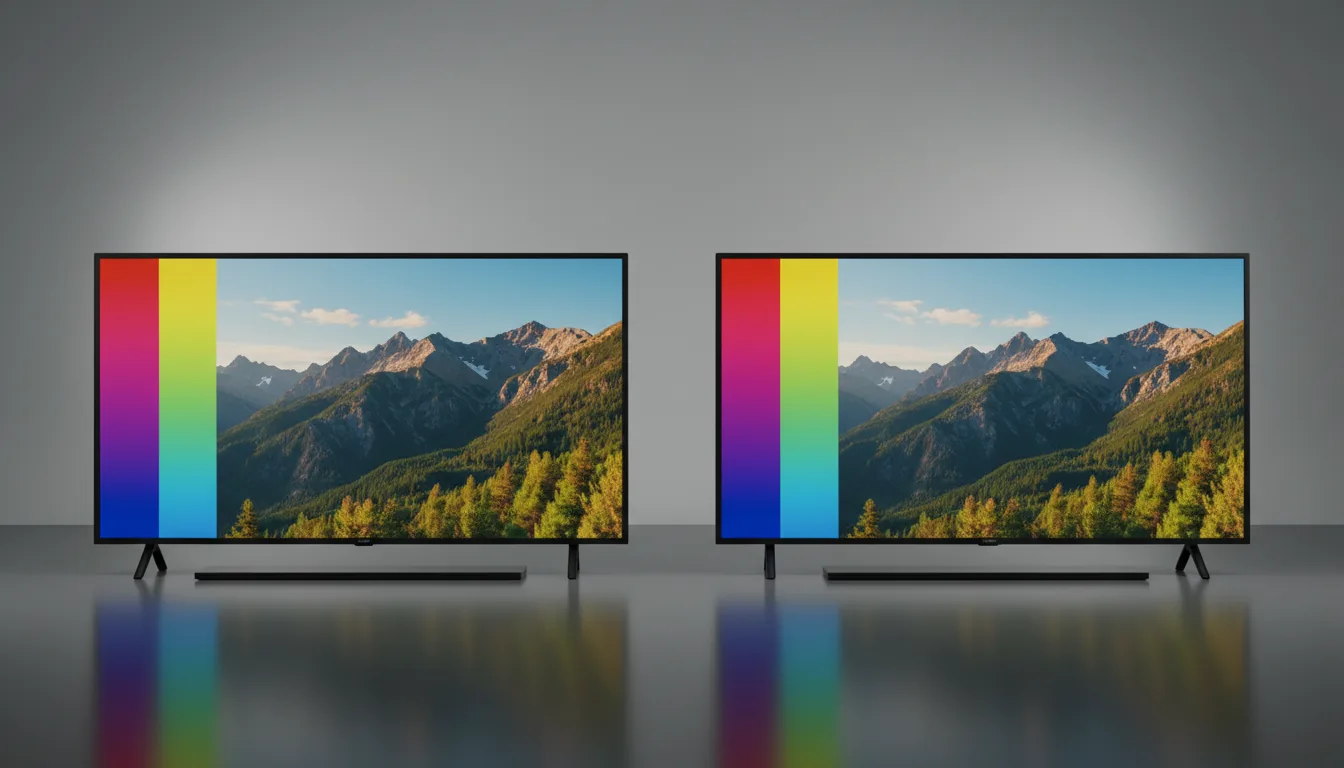
Verdict: The Toshiba 65" C350 is the better TV for anyone who plans to watch it regularly. Dolby Vision, Regza Engine processing, and wider HDR format support deliver a visible picture quality improvement that justifies the modest price difference. But for a guest room, garage, or dorm room where every dollar counts and nobody's analyzing black levels, the Insignia 65" Fire TV gets 65 inches of 4K onto your wall for less.
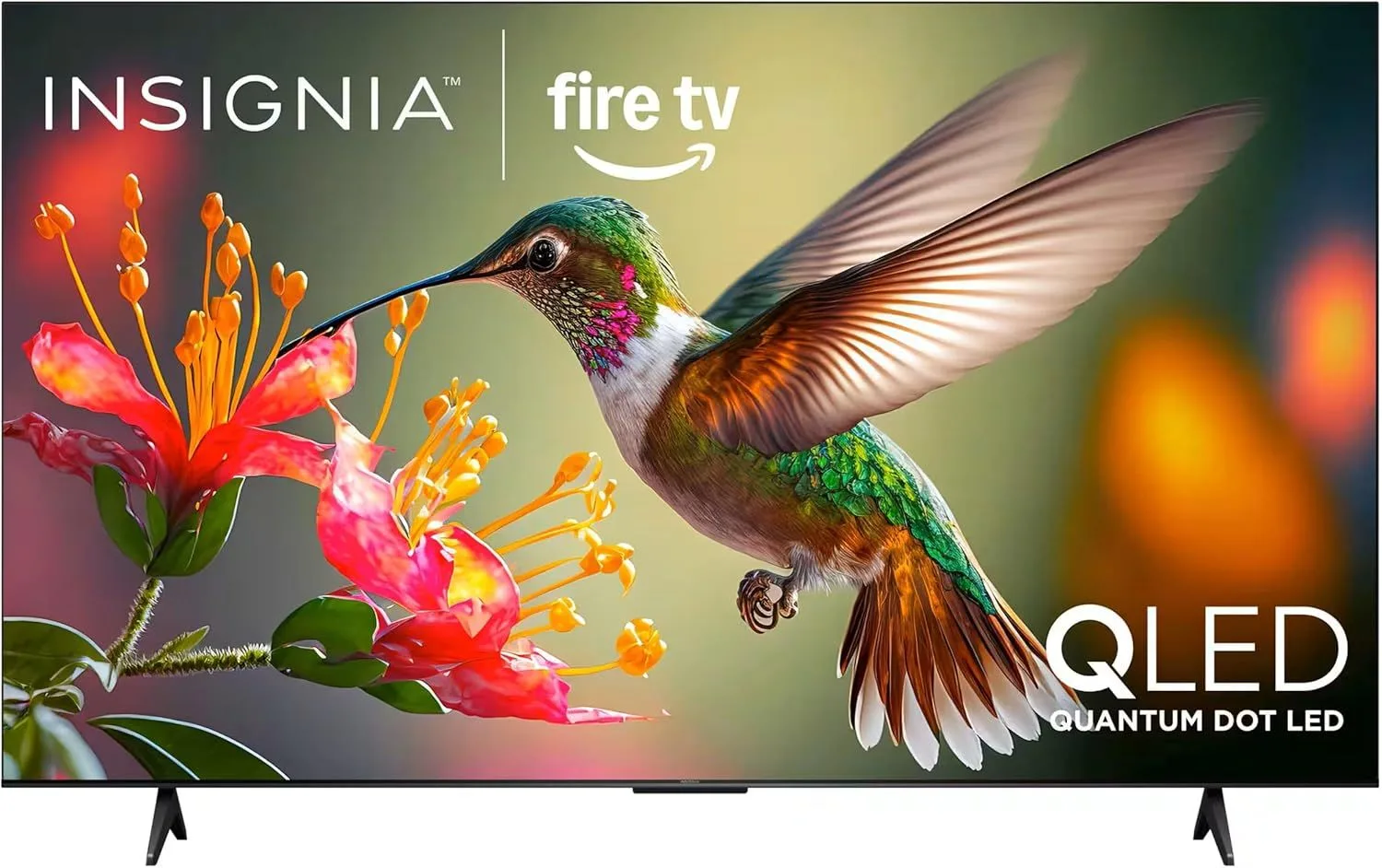
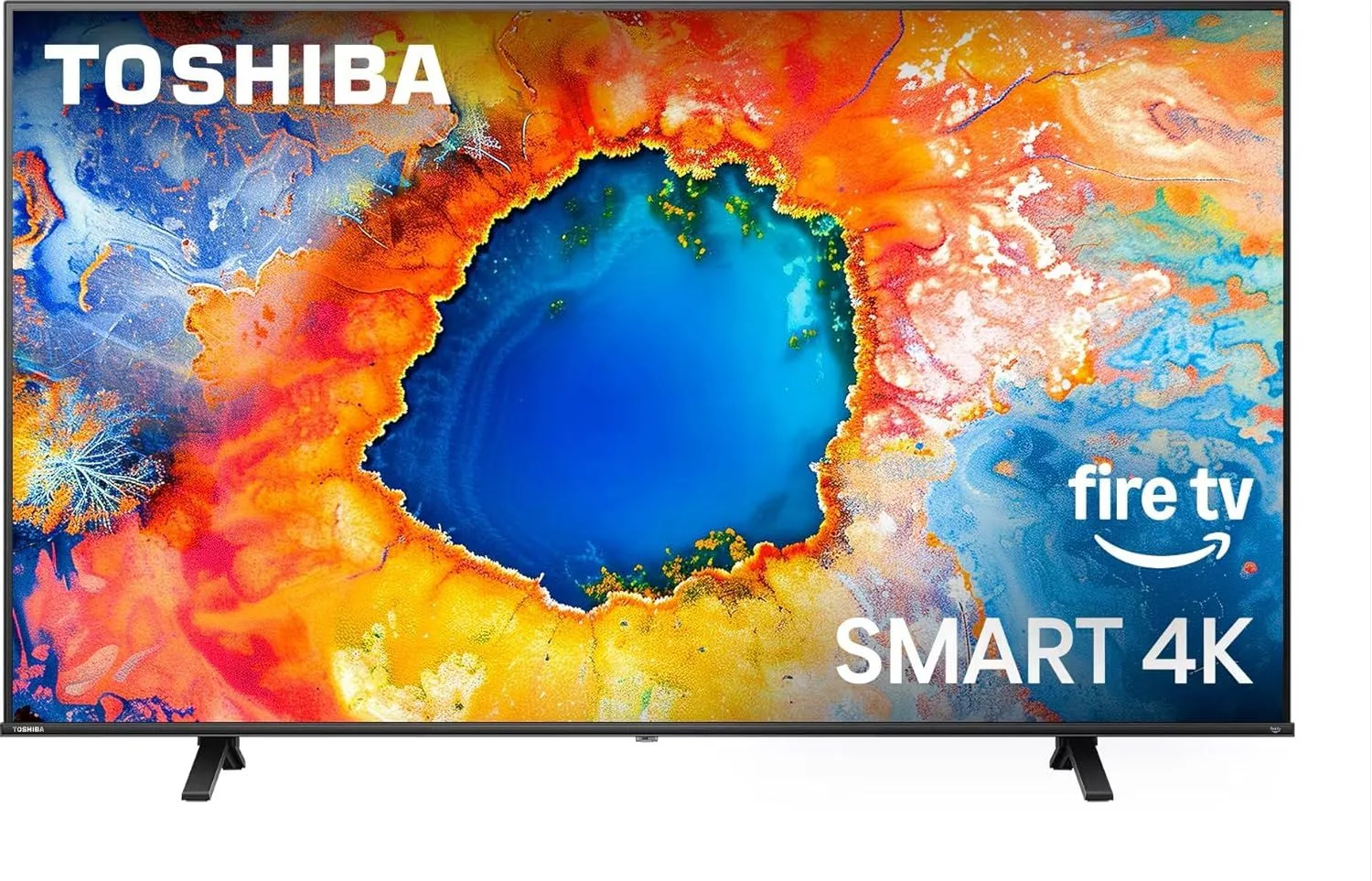
Full Specs Comparison
| Feature | Insignia 65" 4K UHD Smart Fire TV (2025) | Toshiba 65" C350 4K LED Smart Fire TV |
|---|---|---|
| Price Range | $300–$500 | $300–$500 |
| Screen Size | 65" | 65" |
| Panel Type | LED | LED |
| Resolution | 4K UHD | 4K UHD |
| Refresh Rate | 60Hz | 60Hz |
| HDR Formats | HDR10 | HDR10, Dolby Vision, HLG |
| Smart Platform | Fire TV | Fire TV |
| Check Price | Check Price |
What Separates Two Budget Fire TVs
On a spec sheet, these TVs look nearly identical. Both are 65" 4K LED panels, both run Fire TV with Alexa, both have 60Hz refresh rates, and both come with 3 HDMI ports. The differences are subtle but real: the Toshiba packs Dolby Vision support, Toshiba's Regza Engine picture processing, and DTS Virtual:X audio enhancement. The Insignia strips those extras out to hit a lower price floor. This is a comparison of how much those incremental improvements are worth to you.
Head-to-Head Breakdown
Picture Processing & Upscaling C350 Wins
The Toshiba's Regza Engine is the single biggest differentiator between these TVs. It handles color mapping with more accuracy, upscales lower-resolution content more cleanly, and produces smoother gradient transitions in compressed streaming sources. The Insignia runs a basic system-on-chip with minimal picture processing — what the panel delivers is essentially what you see, with almost no algorithmic enhancement.
Streaming a 1080p show on both TVs side by side, the Toshiba resolves finer detail in faces and textures, and color banding in sky gradients is less visible. The difference isn't dramatic at a glance, but it accumulates over a two-hour movie. For a TV you watch every day, that processing advantage compounds into a noticeably better viewing experience over time.
HDR Formats & Dynamic Range C350 Wins
The Toshiba supports HDR10, Dolby Vision, and HLG — three HDR formats. The Insignia supports only HDR10. On a budget LED panel with limited peak brightness, Dolby Vision won't produce the jaw-dropping HDR spectacle you'd get from a Mini-LED or OLED. But it does improve the handling of dark scenes and bright highlights in Dolby Vision content from Netflix, Disney+, and Apple TV+.
Dolby Vision adjusts HDR metadata frame by frame, which means even on a modest panel, shadow detail is slightly cleaner and highlight clipping is slightly more controlled. It's a refinement, not a revolution — but at this price, any visible improvement matters. The Insignia's HDR10 processing is static by comparison: one set of metadata for the entire stream, with no scene-by-scene optimization.
Screen Size Value Insignia Wins
The Insignia is the cheapest name-brand 65" 4K TV on the market. Full stop. If the primary goal is maximum screen size at minimum cost from a brand with retail support, the Insignia wins this category outright. The money saved over the Toshiba can fund a wall mount, a budget soundbar, or a better streaming stick — any of which may improve the overall entertainment setup more than the Toshiba's incremental picture processing advantage.
For secondary TVs — a guest bedroom, a garage gym, a child's room, a vacation rental — picture quality beyond "adequate 4K" is irrelevant. The Insignia delivers 65 inches of adequate 4K with Fire TV built in, and that's all it needs to do.
Audio Quality Tie
The Insignia has 12W speakers. The Toshiba has 10W speakers with DTS Virtual:X virtual surround processing. In practice, both sound thin, lack any real bass, and struggle with dialogue clarity at moderate volumes. The Toshiba's DTS Virtual:X adds a slight sense of spatial width, but calling it "surround sound" is generous. Neither TV produces audio that matches a 65-inch viewing experience. A budget soundbar is essential for either.
Smart Platform & Daily Experience Tie
Identical. Both run Amazon's Fire TV with the same home screen, same app library, same Alexa voice integration, and same sponsored content placements. You'll see the same ads, navigate the same menus, and use the same remote. If you're choosing between these two TVs based on smart TV features, don't — they're the same platform running on the same software build. The only difference is under the hood, in picture processing, not in the day-to-day interface.
Overall Value for Regular Viewing C350 Wins
For a TV you plan to watch most evenings — streaming, movies, live TV — the Toshiba earns its modest premium. Dolby Vision support, Regza Engine processing, and broader HDR format compatibility deliver a cumulative picture quality advantage that becomes more noticeable the more you watch. The price difference between these two TVs is small enough that the Toshiba's improvements represent good value per dollar spent.
The Insignia wins only when picture quality is secondary to price. If you're furnishing multiple rooms on a strict budget, the Insignia's lower floor price frees up money for other purchases. But for a single TV that serves as the household's primary screen, the C350 is the smarter investment.
Who Should Get Which?
Get the Insignia 65" Fire TV if...
- Absolute lowest price is the only priority — see all our budget LED picks
- This is a secondary TV for a guest room, garage, dorm, or small room
- You plan to pair it with an external streaming device like Roku or Apple TV anyway
- You'd rather put the savings toward a soundbar or wall mount
Get the Toshiba 65" C350 if...
- This will be a primary or regularly-watched TV where picture quality matters — our buying guide explains what to look for
- You want Dolby Vision for better HDR handling on Netflix, Disney+, and Apple TV+ — great for streaming households
- The Regza Engine's upscaling and color improvements justify the modest premium
- You stream a mix of 1080p and 4K content and want better upscaling quality
Frequently Asked Questions
Both TVs run Fire TV — is the software experience identical?
Almost. The interface, app library, Alexa voice controls, and ad placements are the same on both. The Toshiba C350 runs the Regza Engine processing layer underneath, which improves picture handling from streaming sources. But from a menu-navigation and app-launching perspective, the daily experience is effectively the same.
Does the Toshiba C350's Dolby Vision matter on a budget LED panel?
It helps, but modestly. Dolby Vision dynamically adjusts HDR metadata scene by scene, which improves shadow detail and highlight control even on a panel with limited brightness. You won't get the full Dolby Vision impact you'd see on a brighter Mini-LED or OLED, but dark scenes on Netflix and Disney+ look a touch more refined on the C350 than on the Insignia's HDR10-only processing.
Can either of these TVs do 4K/120Hz gaming?
No. Both are 60Hz panels with HDMI 2.0 ports. Neither supports VRR, ALLM, or 4K/120Hz input. They're fine for casual 4K/60fps gaming on a PS5 or Xbox, but serious gamers should look at TVs with 120Hz panels and HDMI 2.1 — those start in the mid-range QLED category.
Which TV has better speakers?
The Insignia has 12W speakers; the Toshiba has 10W speakers. Neither sounds good. The Insignia technically pushes a tiny bit more volume before distortion, but the difference is negligible. Both TVs need an external soundbar for acceptable audio at 65 inches. Budget the same soundbar purchase regardless of which you choose.
Is the Insignia a rebranded Hisense or Toshiba?
Insignia is Best Buy's house brand. The hardware is manufactured by third-party ODMs — often Hisense-affiliated factories. Toshiba-branded TVs in North America are also manufactured by Hisense under license. Both are Hisense-adjacent in manufacturing, but the Toshiba includes Regza Engine picture processing and Dolby Vision support that the Insignia lacks.
Is the extra cost of the Toshiba C350 worth it?
For a primary living room TV where you watch regularly, yes. Dolby Vision, Regza Engine processing, and better color handling deliver a visible improvement in everyday streaming. For a guest room, garage, or secondary screen where nobody's scrutinizing picture quality, save the money and buy the Insignia.
Ready to Buy?
Also Compare
Still Deciding?
Track Both Products
We'll email you if either price drops or availability changes.
Only when something changes. Unsubscribe anytime.