TV Size Guide: What Size TV Do You Need?
The number one TV-buying mistake is choosing a screen that is too small for your room. At 4K resolution, the "too close" problem from the old HD days is essentially gone — you can sit surprisingly close to a large panel without seeing individual pixels. This guide gives you a formula, a reference table, and room-by-room recommendations so you buy once and stop second-guessing.
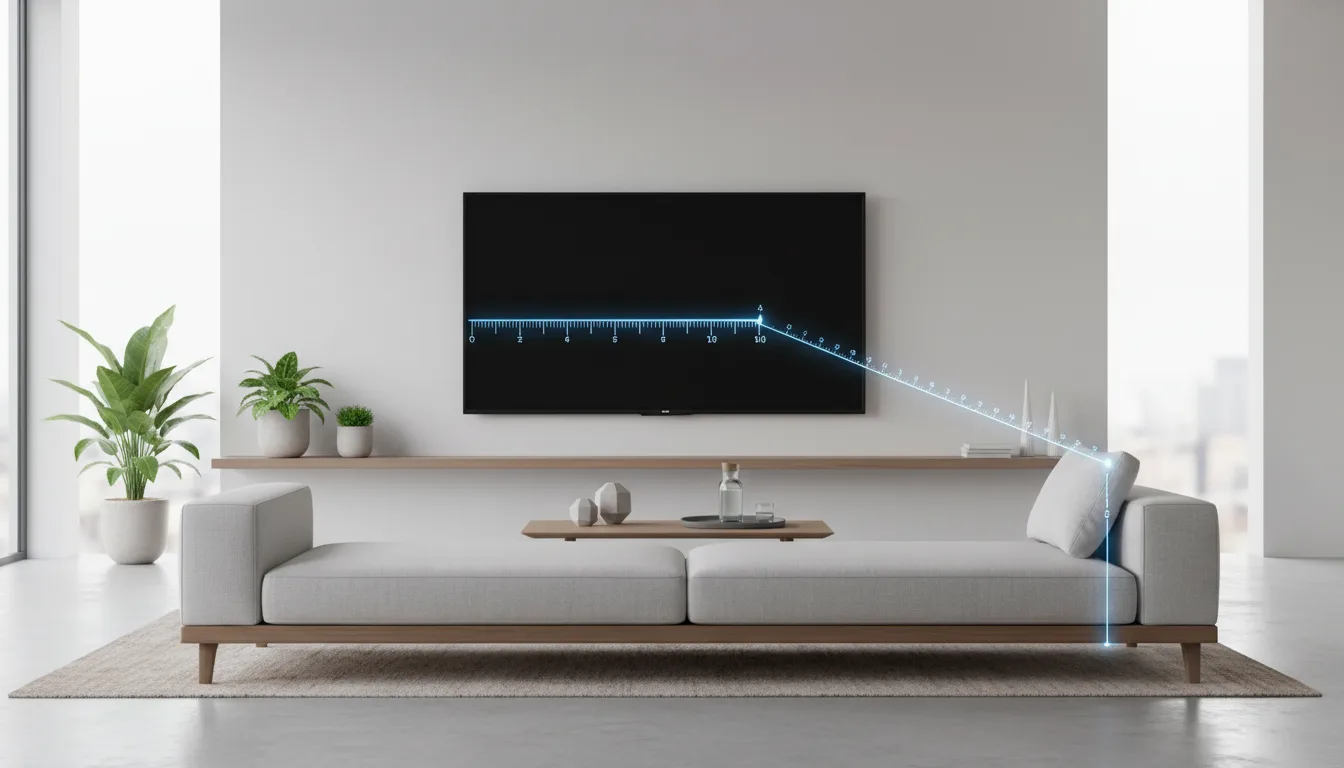
The Formula: Viewing Distance Divided by 1.5
THX, the Imaging Science Foundation, and most display calibrators agree on the same baseline: take your viewing distance in inches and divide by 1.5. The result is your minimum recommended screen size for immersive 4K viewing.
This is not a ceiling — it is a floor. Going larger almost always improves the experience. Going smaller is where regret lives.
Quick Reference Table
| Viewing Distance | Minimum Size | Ideal Size | Best For |
|---|---|---|---|
| 4-5 feet | 32-40" | 43" | Desk, kitchen |
| 5-6 feet | 40-48" | 50-55" | Small bedroom |
| 6-8 feet | 48-55" | 55-65" | Bedroom, small living room |
| 8-10 feet | 55-65" | 65-75" | Standard living room |
| 10-12 feet | 65-75" | 75-85" | Large living room |
| 12+ feet | 75" | 85"+ | Great room, media room |
Measure from where the TV screen will sit (not the wall — account for TV depth and any stand/mount offset) to where your eyes are when seated. Use a tape measure, not a guess. Most people overestimate their viewing distance by 1-2 feet, which throws off the calculation.
Room-by-Room Sizing Guide
Bedroom (5-8 Foot Viewing Distance)
Bedrooms typically place the TV on a dresser or wall-mounted across from the bed. The distance from headboard to opposite wall in a standard bedroom is 10-12 feet, but your eyes are roughly 5-8 feet from the screen when propped up on pillows.
At that distance, 50-55 inches is the sweet spot. A 55-inch TV feels immersive without overwhelming a bedroom. Going down to 43 inches makes sense in very small bedrooms or if the TV is mounted on a side wall rather than directly ahead.
Standard Living Room (8-10 Foot Viewing Distance)
The most common TV placement scenario. A sofa sits 8-10 feet from the entertainment center or wall mount. Here, 65 inches is the most popular size for good reason — it provides a genuinely cinematic feel at typical living room distances.
If your budget allows, 75 inches at 10 feet is noticeably more immersive. The jump from 65 to 75 inches is larger than it sounds — 33% more screen area.
Large Living Room or Great Room (10-14 Feet)
Open floor plans and large rooms push viewing distances to 10 feet and beyond. At these distances, a 65-inch TV starts feeling like a postage stamp. 75-85 inches is the range you need. Budget buyers should prioritize the 75-inch size even if it means choosing a less expensive panel technology.
Check your furniture before buying 75"+. Measure your TV stand width. Many entertainment centers max out at 60-65 inches of surface width. A 75-inch TV has a stand span of approximately 57-62 inches. An 85-inch TV may require wall mounting or a new stand entirely.
Home Office or Desk Setup (3-5 Feet)
Using a TV as a computer monitor is increasingly common. At desk distance (3-5 feet), even a 43-inch 4K panel fills your vision. A 50-55 inch TV at arm's length is immersive for productivity and gaming but can cause neck strain if the screen center is not at eye level.
Why People Buy Too Small (And Why You Should Not)
Three psychological traps push buyers toward undersized TVs:
- Showroom illusion — TVs look enormous on a store wall because the ceiling is 20 feet high and you stand 3 feet away. At home, that same TV shrinks against your furniture and 8-foot ceilings.
- Price anchoring — The 55-inch model is always cheaper than the 65-inch. But the cost-per-inch drops dramatically at larger sizes, and a 75-inch budget TV often costs less than a 55-inch premium model.
- The old HD rule — Older "sit 3x the screen height away" advice was designed for 1080p. With 4K, that rule is obsolete. You can sit 1.5x the screen height away and still see a crisp image.
Cut a piece of cardboard to the exact screen dimensions of the TV you are considering. Tape it to the wall where the TV will go, sit in your normal spot, and decide if it feels right. This takes 5 minutes and prevents months of wishing you had gone bigger.
Size Recommendations by Budget
Maximum Screen on Minimum Budget
If raw screen size matters most, the Insignia 75" Fire TV delivers 75 inches at $300–$500. Picture quality is basic, but the sheer size creates an impact that smaller premium TVs cannot match at this price. Read our review.
Best 55-Inch Value
The Toshiba 55" C350 adds Dolby Vision and better processing than bare-budget options at Under $300. The ideal bedroom TV. Read our review.
Best 65-Inch All-Rounder
The Samsung 65" QN70F brings Mini-LED technology with strong brightness and gaming features to the 65-inch class. A strong choice for the most common living room setup. Read our review.
Best 75-Inch Performance
The TCL 75" QM6K packs Mini-LED performance with hundreds of dimming zones into a 75-inch panel. The step up from budget 75-inch TVs is dramatic. Read our review.
Frequently Asked Questions
What size TV do I need for a 10-foot viewing distance?
Can a TV be too big for a room?
What size TV for a bedroom?
Does TV resolution affect the ideal size?
What size TV for a 12x12 room?
Is 55 inches big enough for a living room?
Find Your Ideal TV
Once you know your target size, the next step is choosing a panel technology and budget tier. Our Complete TV Buying Guide walks through every remaining decision, or jump straight to our size-specific roundups: small room TVs and large room TVs.
Know your size? Find your TV.
Browse ranked recommendations for every budget and panel type.
Read the Full Buying GuideReady to Buy? Start Here
Based on this guide, our #1 recommendation:
Samsung 65" Q7F The ideal all-around 65-inch pick — great picture at a mid-range price Read Full Review →Can't Decide? Compare Side by Side
Get Our Top 3 Picks
Get our top 3 picks for your budget — one email, then only updates.
Only when something changes. Unsubscribe anytime.